

37th Annual ACFE Global Fraud Conference

Varies by Session
Online

Description
View sessions and earn CPE credits from the 37th Annual ACFE Global Fraud Conference from the comfort of your home or office any time that's convenient for you.
All sessions are available for ACFE-approved CPE credits, with 22 presentations eligible for NASBA-approved CPE credits. You will receive a separate certificate for each session you complete.
Purchase the 37th Annual ACFE Global Fraud Conference (On-Demand) to:
- Earn up to 31 NASBA-approved CPE credits.
- Access on-demand video recordings of more than 70 conference sessions.
- Have the flexibility to pause and resume courses as needed.
Prerequisites
Varies by Session
CPE Information
| CPE Credit: | Up to 31 NASBA Credits |
|---|---|
| NASBA Information: | Fields of Study and NASBA-Approved CPE Credit Vary by Session |
| Advance Preparation: | Varies by Session |
| Last Updated: | July 2026 |
| Delivery Method: | Online |
Credit by Field of Study
| Accounting: | 9.5 CPE (0 NASBA + 9.5 ACFE) |
|---|---|
| Accounting - Governmental: | 2.5 CPE (1 NASBA + 1.5 ACFE) |
| Auditing: | 26.5 CPE (8.5 NASBA + 18 ACFE) |
| Auditing - Governmental: | 1.5 CPE (1.5 NASBA + 0 ACFE) |
| Business Law: | 1.5 CPE (0 NASBA + 1.5 ACFE) |
| Information Technology: | 21.5 CPE (6 NASBA + 15.5 ACFE) |
| Management Services: | 8 CPE (3 NASBA + 5 ACFE) |
| Regulatory Ethics: | 1 CPE (0 NASBA + 1 ACFE) |
| Specialized Knowledge: | 6.5 CPE (1.5 NASBA + 5 ACFE) |
| Behavioral Ethics: | 13.5 CPE (3.5 NASBA + 10 ACFE) |
| Business Management and Organization: | 5.5 CPE (3 NASBA + 2.5 ACFE) |
| Communications and Marketing: | 5.5 CPE (3 NASBA + 2.5 ACFE) |
| Personal Development: | 1.5 CPE (0 NASBA + 1.5 ACFE) |
Sessions
Keynote Session: Alex Winter - General Session

Alex Winter
Actor, Director, Writer
This general session will explore how rapidly evolving technology reshapes trust and creates new opportunities for fraud, which Alex Winter reveals through his investigative filmmaking. Winter will share how he uncovers complex narratives involving cybercrime, financial systems and global fraud schemes and translates them into compelling, human-centered stories.
The conversation will also examine broader questions about truth, trust and accountability in an era of deepfakes, digital manipulation and increasingly sophisticated deception, connecting the themes explored in Winter’s work to the challenges facing fraud examiners today. Along the way, Winter will reflect on his own journey, from his curiosity about technology to his on-going work investigating issues at the intersection of technology, finance and society.
You Will Learn How To:
- Recognize the impact that rapidly evolving technology has on the prevalence of fraud schemes.
- Explore the intersection of truth, trust and accountability as technological manipulation becomes more sophisticated and analyze how this will affect the work of fraud examiners today.
Keynote Session: Dr. Hany Farid - General Session

Keynote Session: Dr. Hany Farid
AI and Deepfake Detection Expert, Professor and Author
In this interactive session, AI and deepfake detection expert Dr. Hany Farid examines the rapidly evolving state of generative AI and what it means for fraud prevention today. He will discuss what modern AI models are already capable of producing while dispelling a common myth: that people are good at judging whether images, videos or audio are real.
This session also explores the emerging risk landscape, including agentic AI, and outlines practical mitigation strategies supported by detailed forensic analysis. This session concludes with a live audience Q&A, leaving you with a forward-looking view of what is coming next and how you can prepare for the future.
You Will Learn How To:
- Recognize the capability of AI models to produce convincingly realistic images, audio and video.
- Examine emerging threats related to agentic AI and develop strategies to mitigate their effects on your organization.
Keynote Session: Drew Sullivan and Paul Radu - General Session

Keynote Session: Drew Sullivan and Paul Radu
In this general session, Drew Sullivan and Paul Radu, co-founders of the Organized Crime and Corruption Reporting Project (OCCRP), reflect on the mission and impact of their nonprofit newsroom’s work exposing financial crime and corruption around the world. They will share how OCCRP was founded, the investigative resources it has created to support journalists and fraud fighters globally, and the real risks involved in uncovering powerful criminal networks.
Drawing parallels between investigative journalism and fraud examination, Sullivan and Radu will highlight the essential role of collaboration as crime and corruption grow more complex and transnational. The session offers a candid look at how the threat landscape is changing and why a coordinated, mission-driven approach remains critical to fighting fraud and protecting the public interest.
You Will Learn How To:
- Recall the mission and impacts of the Organized Crime and Corruption Reporting Project.
- Navigate cross-border collaboration with law enforcement, investigative journalists and anti-fraud personnel to share resources and information.
Keynote Session: Her Excellency Dato’ Seri Wan Suraya Wan Mohd Radzi and Noelle Webb, M.S, CPDT-KA, C-AAIS - General Session

Her Excellency Dato’ Seri Wan Suraya Wan Mohd Radzi and Noelle Webb, M.S, CPDT-KA, C-AAIS
Start the conference with an energizing opening general session centered around three core themes: resilience, innovation and courage.
Her Excellency Dato’ Seri Wan Suraya Wan Mohd Radzi, recipient of the 2026 Cressey Award for lifetime achievement in fraud prevention and detection, will provide insight into her career and innovative approaches to auditing and public transparency as the Auditor General of Malaysia.
The session concludes with a fireside chat with Sentinel Award recipient Noelle Webb, who will share her powerful story of courage and strength and how she used her experience as a whistleblower to become an advocate and support others who come forward to expose fraud and corruption.
You Will Learn How To:
- Evaluate key trends and opportunities shaping the anti-fraud profession.
- Recognize the skills and attributes necessary to become a successful Certified Fraud Examiner.
Keynote Session: Sean Mueller - General Session

Keynote Session: Sean Mueller
Convicted Fraudster, Author
In a fireside chat with ACFE President John Gill, J.D., CFE, Sean Mueller shares his firsthand involvement coordinating a complex securities fraud that ultimately came to light. Mueller will discuss how trust was established, how gaps in oversight and controls went unnoticed, and how the scheme persisted for years before unraveling.
This conversation explores the decision-making and rationalizations involved in committing fraud, the impact on victims and communities, and lessons learned on accountability and transparency. This informative session offers fraud examiners practical insight into the rationalization of a fraudster, behavioral red flags, organizational vulnerabilities and the human realities behind major financial crimes.
*The ACFE does not compensate convicted fraudsters.
You Will Learn How To:
- Examine a case study and recall the deficiencies in oversight and controls that created an opportunity for fraudulent misconduct.
- Recognize the behavioral red flags and organizational weaknesses that provide fraudsters with rationalization for their illicit behavior.
This session provides ACFE ethics credit, which counts toward the ACFE's annual ethics CPE requirement for CFEs. To learn more about the ethics CPE requirement for CFEs, please visit ACFE.com/EthicsCPE.
Everyone’s Problem, No One’s Job? Building Fraud-Resilient Organizations - 2A/5I

Ursula Schmidt, Ph.D., CCEP-I
Founder Schmidt Advisory
Fraud is widely recognized as a growing, multi-dimensional risk – yet, in many organizations, it remains both everyone’s problem and no one’s responsibility. Despite rising threats, increased regulatory pressure, gaps in ownership, coordination and execution continue to undermine effectiveness and anti-fraud management.
This session will explore what differentiates fraud-resilient organizations from those that merely react. Drawing on practical experience, this session reframes fraud management as an organizational capability rather than a standalone function. The session will also introduce you to five core building blocks of resilience and show how reducing complexity is often more impactful than adding new controls or blindly trusting technology.
You will examine how organizations can better understand fraud risks, translate insight into action and shape cultures that support transparency, accountability and effective responses. Topics in this presentation include overcoming awareness and training fatigue, making smarter use of data and analytics and removing collaboration roadblocks. Particular attention is given to organizational culture, speak-up mechanisms and response practices.
You will leave with concrete, actionable steps to strengthen fraud resilience—focusing not on perfect systems, but on better alignments, clearer ownership and visible leadership commitment.
You Will Learn How To:
- Identify the key organisational gaps that cause fraud to remain “everyone’s and no one’s job,” and understand how these gaps weaken fraud resilience.
- Apply the Know–Act–Look framework to start assessing and improving how organisations understand fraud risk, take action, and reinforce the right behaviours and culture.
- Determine how concrete, practical, scalable improvement steps can strengthen fraud resilience, and how a fresh look at culture and collaboration is the secret sauce for sustainable fraud resilience.
AI-Augmented Investigations: Leveraging AI Agents to Accelerate Human-Led Investigations - 2B

Lyn Cameron, CFE, LLB and Kaoibha Merrick
AI agents are moving from hype to hands-on help in fraud investigations. In this session, you will examine how AI agent workflows accelerate triage, analysis, interview prep and case documentation under human investigator supervision.
This session will demystify how AI agents operate and ways to counteract the real risks of LLMs (such as hallucinations and math errors) with practical mitigation steps. Finally, you will be provided with practical paths—governance, starter patterns and low code/no code options—that democratize the technology so any fraud team can start safely.
You Will Learn How To:
- Identify use cases for AI agents and create a plan for leveraging them across the investigation life cycle.
- Discern how AI agents utilize next-word prediction, chain-of-thought reasoning, custom instructions, and retrieval-augmented generation to execute tasks and generate content.
- Recognize and mitigate common risks with large language models.
Insider Fraud: The Case of the Employee and the Men's Room - 2C
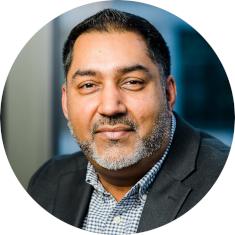
Ashu Sharma, CFE, CCEP-I, CCI
Group Investigations Manager Anglo American
This interactive session will explore a real life case study of multiple, interconnected insider fraud and code of conduct breaches within an organization. The presenter will analyze each event, highlighting the specific control failures and lapses that allowed these breaches, involving hundreds of employees, to materialize. By juxtaposing these events with the procedures that should have been in place, you will gain a comprehensive understanding of how to effectively mitigate insider risks. Truth is sometimes wilder than fiction.
You Will Learn How To:
- Recognize how insider risks can manifest and their potential impact on organizations.
- Identify common control weaknesses that can lead to insider risk events.
- Recall the procedures and controls that should be in place to mitigate insider risks.
- Develop strategies for proactively managing and mitigating insider risks.
Fraud Beyond the Numbers, Sponsored by Mubadala - 2E

George Vamvourellis, CFE and Ahmed Alhammadi, CFE
This session reframes fraud as a system-driven risk, where losses are only the visible outcome of deeper behavioral and governance failures. You will explore how modern fraud — enabled by technology, cross-border complexity and AI — exploits human behavior by using pressure and misplaced trust to bypass safeguards.
Through real case studies and practical insights, this session focuses on designing controls, strengthening culture and shifting from detection to prevention.
You Will Learn How To:
- Identify fraud risk indicators beyond financial anomalies, including behavioral red flags, governance weaknesses and emerging schemes such as deepfake-enabled deception and synthetic identity fraud.
- Address fraud risks by applying investigative skepticism, challenging management narratives and recognizing how pressure, authority and cross-border complexity create opportunities for fraud.
- Implement practical fraud prevention and detection techniques — such as independent verification, pathway-based control design and structured escalation — to interrupt fraud before it results in financial loss.
Forensic Accounting: Court Approved Methods for Proving Financial Discrepancies - 2F

Robert Nordlander, CFE, CPA, MBA
Sole Shareholder Nordlander CPA, PLLC
This session explores how forensic accountants calculate financial losses using methods approved by federal courts. These methods, such as the Net Worth Method, Expenditures Method and others, are critical tools for proving financial discrepancies in litigation. Each method is selected based on the facts and circumstances of the case. By attending, you will learn when and how to apply these techniques, understand their strengths and weaknesses and master the formulas used to calculate losses.
You Will Learn How To:
- Recall court-approved methods for identifying and proving financial anomalies.
- Examine key court cases that validate these methods.
- Calculate losses using different methods of proof.
- Select the appropriate method based on the given facts and evidence.
Criminal Cargo: Navigating Fraud and Trade-Based Money Laundering - 2I/4E

Michael Schidlow, CFE
Professor and Lecturer
This engaging session explores the intersection of fraud and trade-based money laundering (TBML). Drawing from real-world cases, global advisories and typologies involving sanctioned entities and illicit financial flows, you will examine how fraud, from misrepresentations in shipping to the use of shell companies, fuels complex laundering schemes. You will dissect the mechanics behind fake freight, manipulated trade documents, front companies and generative AI-driven fraud, with special emphasis on North Korean state-sponsored financial crimes and human trafficking as predicate offenses.
By attending, you will gain insights into how misrepresentation and layered transactions obscure value transfer, as well as how red flags in trade documentation and vessel behavior can signal criminal activity.
You Will Learn How To:
- Recognize how fraud underpins trade-based money laundering, enabling illicit value flows through falsified invoices, misclassified goods, and disguised ownership structures.
- Recall how shell companies, ship-to-ship transfers, and black-market bartering layer transactions and create opacity across borders and regulatory frameworks.
- Navigate real-world typologies involving North Korea’s Office 39 and other cases, highlighting anomalies, generative AI misuse, and document manipulation as red flags for TBML activity.
Auto Insurance Fraud Uncovered: Schemes, Investigations, and Consumer Misconceptions - 2J

Matt Killam, CFE, MBA
SIU Senior Investigator GEICO
This session will explore the many forms fraud can take, including staged accidents, claim inflation, vehicle fires, theft, policy misrepresentation and more. You will gain insight into how investigators approach these schemes, using data analysis, interviews and collaboration with industry partners to uncover fraudulent activity. In this session, a special focus will be placed on the concept of soft fraud—the subtle, often overlooked behaviors such as exaggerating damages or misreporting minor details. While many consumers view these actions as harmless or acceptable, they contribute significantly to rising insurance costs and undermine trust in the system. By examining the fine line between misunderstanding and intentional deception, you will better appreciate the hidden impact of fraud and the importance of prevention across the industry.
You Will Learn How To:
- Recall the various types of auto insurance fraud.
- Examine methods used to detect deception.
- Develop an understanding of the fine line between honest mistakes and actions that constitute fraud—highlighting how misconceptions can lead to inflated claims and rising insurance costs.
Fool Me Twice: How to Use Prior Fraud Schemes to Detect Your Next Fraudster - 4A

Tope Eletu-Odibo, CFE, MBA and Maxx Eckert, CFE
In a recent investigation involving purchasing card misuse and fake vendors, the Austin City Auditor’s Office issued a report in December 2025 about a city employee who created several fake vendors and misappropriated close to a million dollars of the City of Austin funds. As a result, some of the lessons learned from this investigation spurred a detection project to identify and flag other potential fake vendors in the rest of the city, leading to two new investigations.
This case study will cover key investigative steps, findings and lessons learned from the first investigation, as well as explore how the identified red flags were used to launch a successful integrity project that exposed other card users creating fake vendors.
You Will Learn How To:
- Examine an egregious example of purchasing card fraud by an employee.
- Identify key red flags of purchasing card fraud and fake vendors.
- Explore how the lessons learned can be used in proactive fraud detection to save your organization money.
OSINT and Asset Recovery in Financial Investigations - 4B

Cynthia Hetherington, CFE, OSC
CEO and Founder Hetherington Group
As financial crime schemes grow in complexity, forensic accountants and valuation professionals must be equipped with investigative techniques to identify, trace and recover stolen assets. This session will explore how open-source intelligence (OSINT) and financial investigations play a critical role in asset recovery, providing attendees with actionable insights into identifying hidden assets, detecting illicit transactions and navigating international recovery challenges.
You will gain practical knowledge of investigative methodologies, real-world case studies and emerging best practices in asset tracing.
You Will Learn How To:
- Leverage publicly available sources to locate stolen and concealed assets.
- Identify financial patterns, shell companies and illicit transactions that indicate asset misappropriation.
- Navigate international asset recovery challenges such as jurisdictional barriers, regulatory frameworks, and cross-border collaboration strategies.
- Analyze successful asset recovery operations and the methodologies behind them.
The Scam Economy: Threats, Verticals, Detection, Regulation, and the Human Front Line, Sponsored by Concentrix - 4F

Rosemary Lugo-Gross, Quinten Hout, David Porter and Tif Chesnos
Scams have eclipsed traditional fraud as the defining financial-crime threat of the decade. Unlike classic account takeover or card fraud, today’s scams weaponize the victim’s trust, socially engineering people into authorizing payments, surrendering credentials or unwittingly coaching themselves past the very controls designed to protect them. Authorized push payment (APP) scams, investment and romance fraud, impersonation and AI-accelerated deception now cut across every consumer-facing vertical: banking, ecommerce, social platforms, telecoms and crypto.
This panel will bring together cross-industry leaders to map the modern scam economy from end to end. The session will examine how the same scam typologies manifest differently across verticals, how detection is evolving from transaction monitoring toward behavioral and conversational signals, and how a fragmented global regulatory landscape is reshaping liability and the duty of care owed to customers.
You will also explore a scenario that is now routine in contact centers worldwide: a bank blocks a suspicious transaction, and the customer calls in frustrated and insistent — sometimes with the scammer actively coaching them through the call. You will examine the technology and conversational cues that can surface a live coach, best practices for handling these high-stakes, emotionally charged interactions, and the often-overlooked psychological toll on agents who absorb the distress of defrauded customers. The discussion will close on what truly moves the needle: customer education, intervention design and building a resilient, well-supported front line.
You Will Learn How To:
- Distinguish between the major scam typologies and explain how each exploits victim psychology rather than system vulnerabilities.
- Evaluate detection approaches that extend beyond transaction monitoring, including behavioral biometrics, device and session signals, and conversational analytics capable of surfacing a live scammer-coach during a customer call.
- Compare the leading global regulatory responses to scams — including UK APP reimbursement, Australia’s Scams Prevention Framework, Singapore’s shared-responsibility model, and emerging U.S. and EU measures — and their implications for cross-border operations.
- Implement best practices for handling sensitive scam-related customer interactions that balance fraud prevention with customer experience.
Fraud Without Footprints: Detecting Schemes in Cash-Based, Low-Infrastructure Environments - 4I

Elizabeth J. Folsom, CFE, CPA, CIA
Chief Audit Executive, Global Internal Audit and Investigation HealthX Partners
Fraud detection in resource-constrained environments requires fundamentally different approaches than traditional methods. When organizations operate in cash-based economies with unreliable internet, manual record systems and limited vendor databases, standard fraud examination techniques often fail. This session explores practical fraud detection and investigation strategies for emerging markets across Africa, Asia and Latin America. Through real case studies, you will learn to identify red flags across diverse fraud schemes, including mobile money manipulation, unauthorized banking transactions, ghost payments, data falsification in manual records, procurement collusion and more. This session will cover detection techniques in paper-based systems where manual records feed digital reporting and addresses procurement fraud when formal vendor registries do not exist. You will gain actionable tools, including fraud red flag checklists, verification protocols for manual systems and vendor due diligence approaches adapted for low-infrastructure settings. Whether investigating overseas operations or expanding into emerging markets, you will be equipped with field-tested techniques that work when digital footprints are limited or nonexistent.
You Will Learn How To:
- Identify red flags unique to cash-based operations in emerging markets in resource-constrained environments.
- Develop investigation techniques for when traditional digital forensics tools are unavailable or impractical, including strategies for verifying transactions in manual record systems and conducting investigations with limited technological infrastructure.
- Assess vendor and third-party risks in environments lacking conventional due diligence infrastructure.
Corporate Investigation Beyond Multinationals: How to Act in Lean Structures - 4J

Giovanna Feres Crotti, CCEP-I
Head of Compliance and Privacy Camilotti Associates, Brazil
As lean structured companies (such as SMEs, family-owned or start-ups) begin to recognize the importance of corporate investigations, compliance professionals face the challenge of operating in environments with limited governance structures and resources, as well as a more centralized leadership. This session explores how to adapt investigative methodologies to these more informal settings without compromising integrity or effectiveness. Through practical guidance and case-based insights, you will discover how to initiate and manage investigations that protect organizational culture while mitigating risk.
You Will Learn How To:
- Identify red flags and triggers for internal investigations in lean structures.
- Develop a step-by-step framework for conducting investigations without a dedicated internal compliance team.
- Recall legal and ethical considerations, including those related to privacy, labor rights and cultural sensitivity.
- Recognize how companies can benefit from conducting internal investigations.
Dissecting Fraud with the Anti-Fraud Blueprint, Sponsored by Grant Thornton - 5A

Anne Layne, CFE, CPA, MBA, Zachary Snickles, CFE, CPA, CFF, Julia Cobb, CFE, CPAD and J Rossini, CCEP
Fraud events rarely happen because of a single “bad control.” They happen when governance is unclear, risks shift faster than assessments, controls deteriorate, investigations fail to translate into preventive action, and monitoring doesn’t support continuous improvement.
This session uses the Anti-Fraud Blueprint to dissect multiple fraud case studies, showing you how to trace each failure back to the Blueprint’s fraud risk management principles (governance, risk assessment, control activities, investigations and corrective action and monitoring). This session will also demonstrate how to convert root causes and lessons learned into lasting program improvements.
You Will Learn How To:
- Dissect fraud events using the Anti-Fraud Blueprint to identify which fraud risk management principle(s) broke down and why.
- Relate frauds and control failures to the necessary fix, such as redesigned controls, clarified ownership, improved escalation paths and stronger evidence trails.
- Determine a remediation plan that connects investigation outcomes to corrective actions and control enhancements to reduce recurrence and improve defensibility.
- Implement diagnostic questions and maturity concepts to prioritize remediation and investment decisions.
Case Study: Investigating Mail Theft Check Fraud Rings - 5B

Daniel Wessel, CFE
U.S. Postal Inspector U.S. Postal Inspection Service
The United States Postal Inspection Service is the federal law enforcement agency that protects U.S. mail. During the pandemic, mail theft increased as criminals across the U.S. exploited weaknesses in the U.S. banking system by counterfeiting and altering checks stolen from the mail.
This session follows the case of a mail theft conspiracy centered in the Prince George’s County, Maryland area that took place during the pandemic. The investigation resulted in state and federal arrests and convictions of several people who worked with Dayvon “Kuntro” Douglas to engage in mail theft enabled check fraud.
You will gain an understanding of how large-scale organized check fraud works in the modern era and some of the investigative methods used by law enforcement to dismantle large check fraud organizations.
You Will Learn How To:
- Recognize how large-scale mail theft-enabled check fraud organizations operate.
- Analyze how social media is used to recruit and organize mail theft-enabled check fraud.
- Recall how law enforcement collects evidence so it can apply for and obtain search and arrest warrants in mail theft–enabled check fraud cases.
- Identify the connection between mail theft–enabled check fraud and organized crime.
The Karen Read Trial: Inside the Evidence, Part 1 - 5C

Derek Ellington, CFE, DFE, ACE
Certified E-Discovery Specialist Ellington Digital Forensics, LLC
The 2025 trial of Karen Read captivated investigators, legal professionals and court observers nationwide. Derek Ellington, a Certified Fraud Examiner (CFE) and digital forensics expert, served as an investigator for Read’s legal team and had first-hand access to the evidence examined in this case. Central to the trial were allegations of law enforcement mishandling and misrepresentation of both physical and digital evidence.
In this session, you will take a detailed look at key evidence, from collection and processing through courtroom presentation, to understand how investigative decisions directly affected evidentiary reliability, admissibility and weight. You will see what was done, what could have been done differently and how early assumptions and narratives shaped the handling and interpretation of evidence across two separate trials.
You Will Learn How To:
- Examine key physical and digital evidence from the trial and how it was collected, processed and presented.
- Review best practices for evidence handling and how deviations can undermine investigations.
- Analyze how an initial investigative narrative was accepted and reinforced despite conflicting evidence.
- Identify how evidence mishandling impacted credibility, admissibility, and trial outcomes.
- Implement lessons learned to improve evidence management and investigative integrity in your own cases.
Is Your Whistleblower Hotline Effective? - 5D

Brian Molloy, J.D., CFE, CIA
Chief of Investigation Office of the City Auditor City of Austin Texas
This session will present best practices for running a fraud reporting hotline, including features like anonymous reporting, independence of allegation collection, and how to make allegation reporting easy and accessible. You will observe how the fraud reporting hotline is operated and hear a first-hand account of running the hotline.
You will explore if your fraud hotline is effective by examining the number of reports it receives, discussing how the hotline is communicated to staff and determining if staff is satisfied with it. You will review data from other government organizations’ hotlines to determine a benchmark and learn about features that you can apply to your own organization’s hotline.
You Will Learn How To:
- Recognize the essential components of a fraud hotline.
- Develop effective strategies to inform staff and encourage use of a fraud hotline.
- Analyze fraud hotline data to determine fraud hot spots in your organization and improve your fraud hotline program.
This session provides ACFE ethics credit, which counts toward the ACFE's annual ethics CPE requirement for CFEs. To learn more about the ethics CPE requirement for CFEs, please visit ACFE.com/EthicsCPE.
Untangling Trends in the Illicit Transaction Landscape - 5E

Victor Cardona, CFE, MBA
Sr. Vice President, Head of Anti-Money Laundering Golden State Bank
Illicit transactions rarely stand alone; They’re part of a broader financial crime ecosystem. As criminals continue adapting their transaction strategies, fraud investigators must adapt faster. This session examines how fraudsters exploit financial institutional blind spots, how investigators trace funds across accounts and entities and which red flags matter most in real-world cases.
You will gain insight into tracing funds through financial institutions and applying those techniques to fraud, corruption and financial crime cases, translating financial intelligence into actionable investigative leads across industries. By attending, you will walk away with practical techniques you can use to connect the dots, uncover hidden relationships and disrupt illicit financial networks by “following the money” with greater precision.
You Will Learn How To:
- Recognize current illicit transaction trends and common methods used to exploit financial institution controls.
- Implement established “follow the money” techniques to trace illicit funds across accounts, entities, and payment channels.
- Identify key transaction red flags and behavioral indicators relevant to fraud and financial crime investigations.
- Analyze transaction activity to detect hidden relationships and patterns within complex financial crime schemes.
- Assess financial intelligence to develop actionable investigative leads applicable to fraud, corruption, and related financial crimes.
Fraud Detection Through Behavioral Cues: What AI Still Misses - 5F

Stephanie Macrafic, CFE
Enterprise Risk Management Specialist Mayo Employees Federal Credit Union
Artificial Intelligence (AI) has transformed fraud detection and continues to expand our access to information. Yet, fraud continues to succeed by exploiting human nature and psychology. While AI tools identify transaction anomalies, they cannot assess emotional influence, cognitive bias or decision-making under stress—all factors that often precede fraud losses. This session will explore how emotional influence, cognitive bias and other social engineering tactics surface during a scam, frequently before risk alerts generate from the data. Drawing on behavioral science and real-world fraud investigations, you will investigate where AI produces false positives and misses context entirely, and why human intuition and judgment remain critical. Additionally, you will talk about the importance of training investigators and analysts to recognize behavioral cues and trust informed intuition, to increase detection accuracy and uncover emerging fraud and risk earlier.
You Will Learn How To:
- Identify the psychological and behavioral cues associated with fraud influence.
- Evaluate the role of intuition and human judgment to strengthen supported AI detection models.
- Recognize limitations of AI models and how training narrows those gaps.
This session provides ACFE ethics credit, which counts toward the ACFE's annual ethics CPE requirement for CFEs. To learn more about the ethics CPE requirement for CFEs, please visit ACFE.com/EthicsCPE.
Operation Nightingale: A Case Study in Investigative Teamwork - 5J

Mary Wielenga-Cline, CFE, DBA and Freddy Ortiz, CFE
Operation Nightingale is a case that has attracted public attention and highlighted cause for concern regarding shortcuts taken by individuals to obtain a nursing degree. Recognizing the public health concern associated with this scheme, the team of investigators, including an FBI forensic accountant, needed to work quickly and accurately to understand the details of the crime and its implications. While FBI and Health and Human Services (HHS) agents investigated this case with boots on the ground, the forensic accountant worked to investigate the case through financial analysis. This case study presentation will unpack the details of the investigation by examining the expertise and cooperation needed by the team and will highlight the forensic accountant's role in this investigation.
You Will Learn How To:
- Incorporate financial analytics into an investigation.
- Present financial information to a nonfinancial audience.
- Use out-of-the box thinking to move an investigation forward.
- Recognize the importance of working as a team, both within an agency and with other agencies and private-sector partners.
Change Fatigue and Fraud: How Constant Shifts Erode Defenses - 6A

Sherese Shy-Holmes, CFE, PMP
Supervisory Auditor U.S. Railroad Retirement Board OIG
Constant change is now the status quo in government and corporate settings; the endless system rollouts, policy changes and technology updates leave many employees feeling worn out and disengaged. This “change fatigue” doesn’t just damage morale, but it undermines the very defenses that organizations lean on to combat fraud. During this session, you will explore how change fatigue erodes internal controls, lowers our level of vigilance and creates the opportunity for rationalizations, which open the door to misconduct.
Using case studies from the Canadian Phoenix Pay System, U.S. Department of Veterans Affairs’ electronic health record modernization and the Target data breach, you will learn about how fatigue formed blind spots for financial, program and cyberfraud. You will leave with an understanding of how behavioral science and fraud risk intersect, how controls fail during periods of disruption, how to build in resilience in a world where change is guaranteed, and tools to stabilize fraud defenses and increase oversight amidst ongoing organizational change.
You Will Learn How To:
- Define change fatigue and explain how it increases fraud risk in government and corporate environments.
- Analyze case studies where change fatigue contributed to financial, program and cyberfraud vulnerabilities.
- Recognize behavioral and organizational warning signs that indicate oversight fatigue.
- Develop practical strategies to protect core fraud controls during times of organizational transition.
- Integrate fraud prevention into change management efforts to strengthen resilience.
Combatting Human Trafficking Through Money Laundering Investigations - 6B

Rachel Stephensen, CFE, CPA
Senior Financial Analyst Las Vegas Metropolitan Police
Ending human trafficking is a priority for governmental and nongovernmental organizations alike. Fraud examiners play an instrumental role in this fight as human trafficking is often facilitated by illicit financial transactions.
This session will explore how Certified Fraud Examiners (CFEs) can uncover and combat human trafficking by identifying financial patterns indicative of these crimes. This session will also explain how financial analysis can complement traditional law enforcement efforts.
The investigative methods presented offer a unique approach for banking professionals, law enforcement, corporate compliance officers and others to tackle this pervasive crime by uncovering and disrupting trafficking networks.
You Will Learn How To:
- Define the legal elements of human trafficking and money laundering.
- Identify red flags of money laundering proceeds derived from human trafficking.
- Develop methods to successfully investigate suspected human trafficking operations.
Rhymes and Crimes: Uncovering the Digital Trail to Corporate Card Fraud - 6C

Melanie Roman, CFE, CPA, CIA
Audit Manager, Fraud & Compliance International Paper
This session explores the complexities of corporate credit card fraud through a detailed case study. You will explore the stages of allegation, detection, investigation and the challenges faced during the process. You will gain insights into the types of corporate credit card fraud, including external fraud such as unauthorized transactions and skimming, as well as internal fraud like misuse of company credit cards and falsified expense reports.
This session also emphasizes the importance of preventive measures and tools for early detection and mitigation of fraud risks. Real-life examples and case studies will illustrate the practical application of fraud detection and prevention techniques, providing a comprehensive understanding of the subject.
You Will Learn How To:
- Explore real-life case studies and examples to better understand the practical application of fraud detection and prevention techniques.
- Recognize the steps involved in detecting and investigating corporate credit card fraud, from initial allegations to final case wrap-up.
- Identify the challenges faced during fraud investigations and the measures implemented to overcome them.
Ethical Investigation: Striking the Balance Between Due Diligence and Fairness - 6D

Jared Ross, CFE, SHRM-CP
Professional Conduct Coordinator Judicial Branch of Arizona
With employee theft and misconduct costing organizations millions of dollars a year in losses, it is crucial for companies to have mechanisms in place to detect and investigate these incidents. But as important as it is to conduct thorough internal investigations, it is just as important to ensure the investigative process is fair. No one wants to work for an organization that automatically assumes wrongdoing, and even when employees are wrong, there can still be a measure of professionalism and respect throughout the investigative process.
This session will help you strike a balance between being a hard-nosed investigator and being procedurally just.
You Will Learn How To:
- Identify ways to increase consistency and transparency through policies and procedures.
- Recognize the importance of active listening, bias recognition, and body language when conducting misconduct interviews.
- Develop simple methods to ensure that employees are treated with respect during internal misconduct investigations.
This session provides ACFE ethics credit, which counts toward the ACFE's annual ethics CPE requirement for CFEs. To learn more about the ethics CPE requirement for CFEs, please visit ACFE.com/EthicsCPE.
Fraud as a Side Hustle: What Is Fueling the Rise of Insider Fraud? - 6E
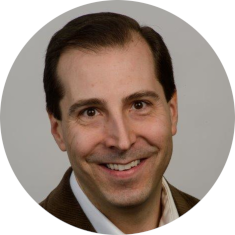
Chris DeAngelis, CFE
VP, Enterprise Fraud Strategy Zelis
The Fraud Triangle has long provided a lens for understanding why people commit fraud, but the current surge in insider and employee-assisted schemes is challenging that model in new ways. Economic uncertainty, social media recruitment and the normalization of easy money side gigs have created a growing insider pipeline that is overflowing with ordinary individuals enticed into extraordinary misconduct.
While financial and psychological pressures continue to drive fraud, opportunity and rationalization have evolved into a hyperconnected, digitally-enabled world. Social platforms and messaging apps have made access and recruitment effortless, while online culture reframes fraud participation as a quick, low risk and even victimless transaction. The result is an emerging class of “everyday insiders,” across all demographics, with motivations that often extend beyond the Fraud Triangle.
In this session, a panel of experts from law enforcement, financial crime investigations and forensic accounting will explore how and why this recruitment is happening, the challenges it poses and what can be done to combat it.
You Will Learn How To:
- Recognize how fraudsters leverage social media and encrypted messaging to target potential insiders.
- Recognize early signs of recruitment activity within institutions and communities.
- Identify the psychological and economic forces that drive individuals who have never before committed crimes to take part in "easy money" schemes.
- Examine the ripple effects for organizations, investigators, and prosecutors when average citizens become accomplices.
A Beginners Guide to Incorporating ChatGPT in the Financial Crimes Space - 6F

Mitchell Farsad, CFE
Director, Financial Intelligence Unit Stifel Financial
In the age of increase artificial intelligence (AI) and ChatGPT use, there have been growing conversations about how these technologies can be safely leveraged in the financial crimes space. Although there are concerns about potential risks associated with ChatGPT or other Large Language Models (LLMs) there are also opportunities if appropriate steps are taken to mitigate these risks. In this session, you will see how ChatGPT can be safely incorporated into the anti-money laundering (AML)/anti-financial crime (AFC) space through several use cases. You will learn tips for enhancing your search queries and best practices and pitfalls to avoid.
You Will Learn How To:
- Identify the methods ChatGPT can be safely incorporated into the AML/AFC investigations.
- Examine cases for utilizing ChatGPT in the financial crimes space using real-world examples.
- Recall best practices for enhancing your search queries and avoiding pitfalls.
Moral Licensing: When Good People Justify Bad Decisions - 6I

Hassan Khayal, CFE, CIA, CRMA
Chief Internal Auditor Mohamed Bin Zayed University of Artificial Intelligence
Why do ethical professionals sometimes make questionable choices? This session explores the psychological concept of moral licensing and the tendency for individuals to give themselves permission to act unethically after doing something they perceive as morally good.
Drawing from behavioral science and real-world fraud cases, this session examines how rationalization, self-perception and organizational culture contribute to ethical fading and small compromises that can escalate into serious misconduct. You will learn how moral licensing manifests in fraud scenarios, particularly among individuals who don’t fit the traditional profile of a fraudster. You will explore how internal audit, compliance and fraud examination professionals can recognize early warning signs, implement preventive controls and promote environments that reduce ethical drift. Through interactive examples and practical strategies, this session will challenge your assumptions about “good” and “bad” actors and provide actionable insights into building stronger ethical cultures before misconduct takes root.
You Will Learn How To:
- Recall the concept of moral licensing and how it influences ethical decision-making in the workplace.
- Identify behavioral red flags and rationalizations that lead to ethical fading and increased fraud risk.
- Analyze real-world examples where moral licensing contributed to fraud and misconduct.
- Implement practical strategies to foster ethical awareness and prevent moral licensing in organizational culture.
When Code Meets Conduct: Fraud Risks in Digital Asset Ecosystems - 6J

Iram Fatima Ansari, CFE
Professor, Head of Accounting Dept Sultan Qaboos University
Digital asset fraud is often framed as a technology problem—but the most damaging failures occur when code, conduct and governance break down simultaneously. This session will examine fraud risks within digital asset ecosystems by moving beyond technical mechanics to focus on behavior, ethics and control failures that enable fraud at scale. Using a major real-world case study, this session will explore how weak governance, compromised ethical culture, management override and absent internal audit functions amplified risks in a high-velocity digital environment. You will analyze how traditional fraud risk indicators manifested in new forms, how legitimacy signals masked underlying misconduct and why reliance on technology without accountability proved catastrophic. Drawing on accounting, internal audit and governance perspectives, this workshop will equip you with a structured lens to identify behavioral red flags, assess digital-asset-related control gaps, and apply professional skepticism in environments driven by innovation and speed. The session emphasizes that while technology evolves rapidly, fraud fundamentals remain decisive in both prevention and detection.
You Will Learn How To:
- Identify key fraud risks and behavioral red flags specific to digital asset ecosystems using real-world case analysis.
- Evaluate governance, ethical and internal control failures beyond technical vulnerabilities that enable digital asset fraud.
- Apply accounting and internal audit principles to strengthen fraud risk assessments and investigations in emerging digital environments.
This session provides ACFE ethics credit, which counts toward the ACFE's annual ethics CPE requirement for CFEs. To learn more about the ethics CPE requirement for CFEs, please visit ACFE.com/EthicsCPE.
Designed for Trust, Exploited at Scale: Why Government Is Easy to Defraud - 8A

Linda Miller
President Program Integrity Alliance
Some of the largest fraud losses in government are a result of programs intentionally designed for speed, scale and trust. Automated eligibility decisions, self-attestation, fragmented data ownership and limited post-payment accountability create structural vulnerabilities that organized fraud actors exploit with remarkable consistency, often with minimal effort. The advanced AI tools available to fraud actors exacerbates this vulnerability dramatically.
This session will examine government fraud through a design lens rather than an investigative one. Drawing on real-world examples from federal benefit and relief programs, you will discover how basic administrative choices can quietly weaken deterrence and enable massive losses without triggering traditional red flags. In this session, you will see how modern fraud networks target process seams, not systems, and why conventional control frameworks frequently fail to capture this risk.
Designed for both public and private sector fraud professionals, this session will equip you with ways to identify “easy pickings” in high-volume payment environments, evaluate structural weaknesses and implement prevention strategies that stay ahead of emerging fraud risks.
You Will Learn How To:
- Identify structural design features in government programs that consistently increase fraud risk at scale.
- Recognize how organized fraud actors exploit administrative process gaps and why these schemes frequently evade traditional controls and detection methods.
- Assess high-volume payment or benefits programs and recognize early warning indicators that signal when fraud risk is embedded in program architecture rather than individual behavior.
Scaling Intelligence: Using AI and Specialized Data to Combat Fraud, Financial Crime, and Human Rights Crimes, Sponsored by Thomson Reuters - 8B

Lesley Park, Jim Isajewicz, Michael Hollenbeck, CFE, CFCI and Alvaro Peon-Sanchez
Rapid advancements in technology, including AI, automation, digital payments and cross-border platforms are transforming the fraud and financial crime landscape. While these innovations drive efficiency and scale, they also introduce new vulnerabilities and enable bad actors to operate with greater sophistication, anonymity and reach, including facilitating human rights abuses such as trafficking and exploitation.
In this session, industry leaders will explore how AI and specialized data can help organizations stay ahead of these evolving risks. The discussion will focus on uncovering hidden fraud patterns, identifying connections to broader criminal and exploitation networks, and automating complex investigative workflows, empowering teams to detect, prevent, and respond to fraud, financial crime and human rights abuses with greater speed, accuracy and confidence.
You Will Learn How To:
- Identify emerging fraud and financial crime risks driven by advancements in AI, automation and digital financial ecosystems, including links to human rights abuses such as trafficking and exploitation.
- Assess challenges in detecting and investigating complex fraud schemes that may be addressed by leveraging AI and specialized data to uncover hidden patterns and connections across criminal networks.
- Choose practical strategies to enhance fraud detection and streamline investigative workflows.
The Karen Read Trial: Inside the Evidence, Part 2 - 8C
Derek Ellington, CFE, DFE, ACE
Certified E-Discovery Specialist Ellington Digital Forensics, LLC
In this session, you will receive a true insider’s perspective on the Karen Read trial with Derek Ellington, a Certified Fraud Examiner (CFE) and digital forensics expert, who was part of the Read legal team. This session is designed for those who followed the case and want a behind-the-scenes examination of what unfolded beyond the courtroom headlines. This session will explore the trial itself and take a deeper look at what the evidence actually revealed, including key questions surrounding events inside 34 Fairview — from Hos long, to pocket dials, to lingering questions about Chloe the dog.
You will examine how evidence was interpreted, misinterpreted and presented, and how perception often played as large a role as facts. This session focuses on separating speculation from evidence and understanding how investigative decisions and evidentiary handling, both real and perceived, can dramatically affect outcomes.
You Will Learn How To:
- Gain an inside look at the trial process from a CFE's perspective.
- Examine what the evidence objectively showed, independent of media narratives and assumptions.
- Discover how evidence handling and perceived mishandling can influence credibility, strategy and outcomes.
When Listening Matters Most: Leveraging Science and Research to Interview Victims Effectively - 8D/2D

Bret Hood, CFE
Director 21st Century Learning & Consulting LLC
This session examines evidence-based principles and practices for conducting effective, ethical and trauma-informed victim interviews. Drawing from psychological, neuroscientific and forensic research, you will explore how memory works, how stress and cognition affect recall, and how interviewer behavior can either enhance or contaminate testimony. Special attention will be given to techniques that empower victims, such as drawing, open-ended questioning, emotional disclosure and rapport-building.
You will also discuss ways to avoid common pitfalls, including suggestive questioning, false memory formation, victim blaming and interviewer-driven bias. By attending, you will learn how to balance empathy, professionalism and investigative rigor to elicit fuller, more accurate accounts while preserving victim autonomy, dignity and psychological well-being.
You Will Learn How To:
- Recognize how memory, stress and cognitive load affect victim recall during interviews.
- Employ trauma-informed interviewing practices to facilitate fuller and more accurate victim accounts.
- Analyze interviewer behaviors and rapport-building techniques.
- Evaluate interview strategies for ethical, forensic and psychological soundness.
- Demonstrate effective victim interviewing skills by integrating rapport, professionalism, emotional awareness and evidence-based questioning.
This session provides ACFE ethics credit, which counts toward the ACFE's annual ethics CPE requirement for CFEs. To learn more about the ethics CPE requirement for CFEs, please visit ACFE.com/EthicsCPE.
Risk, Reimagined - 8F

Brad J. Monterio
Executive Vice President, Learning, Licensing & Sales The Institute of Internal Auditors (IIA)
This session will provide an overview of internal audit's evolving role in a world of interconnected threats. In a world marked by volatility and vulnerability, traditional risk frameworks are being tested like never before. Risks travel faster, hit harder and ripple further — often across borders, functions and systems. From cyber to fraud to climate shift and AI governance, threats are no longer isolated; they're interconnected, systemic and often unpredictable. The new reality demands a more dynamic response.
This session will explore the shift from merely managing risk to enabling performance, building trust and helping organizations move forward with clarity and confidence.
You Will Learn How To:
- Examine the breadth of the risk landscape.
- Identify the expanding role of internal audit in enterprise risk management (ERM).
- Recognize technology's role in internal audit and ERM.
- Analyze what's driving the future of internal audit.
The Traitor’s Playbook: Fraud Lessons from America’s Most Infamous Spies - 8I/4C

Peter Warmka, CFE, CPP
Founder Counterintelligence Institute, LLC
Three of the most damaging insider espionage cases in U.S. history—Aldrich Ames (CIA), Robert Hanssen (FBI), and John Walker (U.S. Navy)—share a common thread: each began as fraud against their employers and the nation. This session dissects how their motives and actions align with the Fraud Triangle of pressure, opportunity and rationalization, demonstrating that espionage can be understood as a high stakes form of occupational fraud. You will see how weak internal controls, cultural blind spots and fragmented oversight allowed these men to operate for years undetected, despite warning signs. This session also highlights reforms, ranging from enhanced financial-disclosure requirements to continuous monitoring and insider-threat programs, that emerged in the aftermath. By examining these landmark cases through a fraud-examination lens, you will gain practical insights on strengthening controls, spotting behavioral red flags, and integrating counterintelligence lessons into modern fraud risk management.
You Will Learn How To:
- Identify psychological drivers, including personal, financial and ideological pressures, that push trusted insiders toward betrayal.
- Recognize control failures in oversight, auditing and reporting that enable undetected activity.
- Apply proven counterintelligence practices (continuous evaluation, lifestyle monitoring, and peer reporting) to strengthen insider threat programs in corporate settings.
This session provides ACFE ethics credit, which counts toward the ACFE's annual ethics CPE requirement for CFEs. To learn more about the ethics CPE requirement for CFEs, please visit ACFE.com/EthicsCPE.
The Missing Link: Why IA and Fraud Teams Struggle and How ISO 37008 Can Help - 8J

Adesola Osuji, LLM, CFE, CISA
Head of Internal Audit Save the Children UK
Many organizations want internal audit (IA) and fraud risk management to work in harmony, but in reality, these responsibilities often clash, overlap or leave critical gaps in oversight. Whether IA and fraud risk sit together or separately, the friction is familiar: unclear mandates, duplicated activity, inconsistent expectations from leadership and uncertainty around who truly “owns” fraud risk. These pressures become even more complex in organizations where IA also carries fraud responsibilities directly. ISO 37008, the newly released international standard for fraud risk management, provides a timely and practical way to resolve these challenges by providing a shared structure for the fraud life cycle and gives both IA and fraud roles clearer boundaries, a common language and a consistent foundation for collaboration. This session breaks down why these struggles persist and demonstrates how organizations can use ISO 37008 to build clearer fraud governance, reduce duplicated effort, improve assurance coverage and support IA in maintaining objectivity even when involved in fraud-related activities. By attending this session, you will leave with concrete steps and practical tools to apply the standard within your own operating model.
You Will Learn How To:
- Identify the root causes of tension and overlap between IA and fraud functions.
- Recall how ISO 37008 structures the fraud risk life cycle and clarifies responsibilities.
- Apply elements of the standard to strengthen fraud governance and reduce duplication.
- Assess how IA can provide independent assurance even when involved in fraud-related activities.
- Outline practical steps for improving coordination between IA and fraud roles using ISO 37008.
Resilience by Design: The Future of Fraud Risk Management - 10A/14A

Bethmara Kessler, CFE
Speaker/Advisor ACFE Regent Emeritus
For years, organizations have built increasingly sophisticated fraud risk management programs, deploying detection systems, anti-fraud controls, monitoring capabilities and governance frameworks. This work has been essential, but the rules of the game have changed. The velocity of threat evolution has accelerated beyond the adaptive capacity of traditional fraud risk management approaches. Traditional fraud risk management was designed for threats we could model, predict and contain, but fraud resilience is designed for environments where threats continuously mutate, recombine in unexpected ways and exploit the seams between our defensive layers.
In this session, you will explore the strategic shift from static defense to adaptive resilience. You will also examine what it means to build programs that don’t just defend against known threats but also develop the organizational capacity to sense emerging patterns, respond proportionally, learn continuously and maintain operational effectiveness even when defenses are penetrated.
This is not about abandoning fraud risk management—it is about evolving it, recognizing that the foundation built now needs to become adaptive, able to learn and change as quickly as the threats we face.
You Will Learn How To:
- Identify known risks and build adaptive systems with the technical, operational and cultural capabilities required to respond to unknown and rapidly evolving threats.
- Explore how to evolve existing programs into resilient systems, including where to start, how to prioritize investments and how to measure progress.
- Develop a framework for maintaining adaptive, effective and intelligent responses when defenses are penetrated.
Revolutionizing Fraud Detection with OSINT: A Fraud Investigator’s Toolkit - 10B

Stephen Hill, Ph.D., CFE, CIIP
Managing Director Hill Bingham Ltd.
This session will explore how AI-powered tools and open-source intelligence (OSINT) techniques are transforming modern fraud investigations. You will learn how to integrate AI into traditional search workflows to improve efficiency and accuracy, apply OSINT methodologies for effective due diligence, and analyze social media activity to uncover patterns and actionable investigative insights.
Designed for fraud professionals, this session will deliver you with practical strategies that can be immediately applied in investigative work.
You Will Learn How To:
- Integrate AI-powered tools into OSINT workflows to enhance investigative efficiency and accuracy.
- Conduct due diligence using public records, corporate databases and reverse image search techniques.
- Analyze social media profiles and online activity to identify patterns and extract relevant fraud indicators.
A Multimillion-Dollar Diamond Investment Fraud and Ponzi Scheme - 10C/14C

Lavderim Hysa, CFE, CPA, Sarah Halleran and Marc Anton
This session will examine how a smooth-talking diamond supplier, a righteous financial advisor and a greedy jewelry appraiser almost got away with a multimillion-dollar diamond investment fraud and Ponzi scheme.
Adam Lowe, the president of Diamond Desk and the manager of its sister company, PetersenLowe, claimed to be a global and key supplier of natural fancy-colored diamonds. Murray Todd Petersen, a former army colonel, clergy member, teacher and financial adviser, was a broker for Diamond Desk and Vice President of PetersenLowe. Petersen would encourage investors to buy purported high-quality diamonds from Lowe, which were supported by falsely inflated appraisals provided by a complicit certified jeweler.
Once investors attempted to recoup their seemingly large profits, Lowe and Petersen turned to another lie, offering a China investment program Petersen had orchestrated, which promised a safe and guaranteed return of 5–8% monthly. Unbeknownst to investors, the Chinese investment program was a Ponzi scheme that paid earlier investors with new money and lined Petersen and Lowe’s pockets with hefty commissions and profits.
You Will Learn How To:
- Recognize the importance of collaboration between government agencies and civil partners in international investigations.
- Identify the role and responsibilities of forensic accountants in the investigation and trial processes.
- Recall best practices and lessons learned from the challenges of complex fraud investigations.
Investigations and Interviewing: Why Compliance and Ethics Matter More Than Ever - 10D

Brian Frasier, CFE, MBA, CCEP-I
Director of Compliance Audit RPM International Inc.
This session will explore the importance of maintaining an ethics and compliance mindset throughout investigations and interviews to help ensure appropriate outcomes. Organizational pressures and other external factors can negatively influence how investigations and interviews are conducted. Establishing a strong ethics and compliance mindset helpsprotect organizations frominvestigations that could otherwise go seriously wrong.
You Will Learn How To:
- Recall the key components of an ethics and compliance mindset.
- Implement an ethics and compliance playbook within your organization.
- Identify negative influences on investigations and interviews.
The NRF Retail Fraud Taxonomy: A Tool for Navigating the Retail Fraud Landscape - 10E

Adam Isles, Evan Gaustad, Jon Tran and Gianni D'Aprile
In this session, you will examine the Retail Fraud Taxonomy, which provides a structured framework for understanding and combating retail fraud. It takes real-world, observed fraud events from a wide range of professionals and organizes them into defined threat tactics, techniques and procedures, creating a clear picture of how attacks unfold.
Each technique is then mapped to recommended mitigations and detection data sources that can help identify and prevent fraudulent activity. By attending, you will understand how the Framework serves as an effective tool for education, communication, security assessments, team exercises and resource prioritization.
You Will Learn How To:
- Identify trending fraud threats facing retailers and explore how fraud incidents are analyzed and organized into specific techniques and tactics.
- Recognize how categorization provides a structured way to understand the methods fraudsters use, making it easier to anticipate and counteract attacks.
- Assess threats by mapping threat tactics, techniques, and procedures to fraud mitigation and detection measures used by leading retailers today.
- Implement mitigation strategies in practical ways by developing controls, preparing business case justifications, learning a common language for information sharing, prioritizing testing, and enriching vendor evaluation.
AI in Fraud Analytics and Audit: Aligning Language Models with ACFE Standards - 10F

Alessio Faccia
Assistant Professor in Finance University of Birmingham, Dubai
This session is designed for fraud examiners and auditors who already use or face pressure to use tools such as ChatGPT and Copilot in their work. The session will begin with real fraud scenarios and show where language models distort facts, invent transactions or misapply accounting and legal concepts. You will then move to practical controls, including an AI task map for fraud work, red flag tests for AI-generated workpapers and prompts that reduce risk without turning examiners into technicians. You will work through a short case to separate acceptable AI support tasks from activities that must remain fully human driven, such as witness interviews and judgement on intent. By attending, you will gain a clear, defensible position on AI use that aligns with ACFE guidance, audit standards and legal scrutiny.
You Will Learn How To:
- Map AI support tasks across the fraud examination process.
- Identify where language models can support planning, data review, and reporting, and where their use introduces unacceptable risk.
- Detect unreliable AI-generated output in fraud work papers.
- Implement simple tests to spot AI hallucinations, missing audit trails, and biased summaries before they reach case files.
- Design an AI usage policy aligned with ACFE standards.
- Draft practical rules, documentation steps, and reviewer checks that keep AI-assisted work defensible in court and under regulatory review.
Control Is a Lie: Why Complexity Has Outpaced Your Governance - 10I/4D

Mary Breslin CFE, CIA, ACA
Founder and Managing Partner Verracy Training and Consulting
The dashboards are clean. The reports are signed off. The risk heatmap is mostly green. And yet, fraud is hiding in plain sight. Modern organizations have grown too complex for traditional controls to keep up — and bad actors know it.
In this session, you will pull back the curtain on how operational sprawl, shadow systems and over-trusted automation create massive blind spots for leadership. You will walk away questioning how much you really know about what lies beneath the surface and what steps you must take to protect your organization from preventable disasters.
You Will Learn How To:
- Identify key breakdown points in modern control environments caused by system complexity and decentralization.
- Recognize how IPE, automation, and AI amplify governance blind spots.
- Distinguish between perceived and actual control strength using real-world fraud examples.
- Navigate questions executives should ask to surface "unknown unknowns" across their operations and tech stack.
Fraud for Sale - 10J/8E

Corey Chadderton
Internal Auditor Barbados Water Authority
Fraud for Sale catapults you into this clandestine realm where criminals operate with product catalogs—from customizable malware kits and deepfake tools to fraud-as-a-service subscriptions. In this session, you will connect the dots between everyday security oversights and this thriving underground economy. With compelling real-world case studies and actionable strategies, you will leave empowered to safeguard your organization and strengthen your defenses against evolving cyber threats. See how today’s fraud economy works, and how you can prevent fraud before it affects your organization. Fraud may be for sale, but your vigilance is priceless.
You Will Learn How To:
- Recognize the tools and tactics of fraud at the point of origin.
- Define the roles and responsibilities of auditors and investigators in cybercrime investigations.
- Develop actionable strategies to safeguard your organization from cyber criminals.
Applied Improvisation: The Strategic Key for Fighting Fraud in the AI Era - 11A

Shalini Haridoss
Risk & Governance Leader and Applied Improv Strategist
Applied improvisation, including applied improvisation comedy, modifies stage-tested improvisational methods into workplace protocols. This session presents a strategic, evidence-based blueprint for embedding improv into anti-fraud programs with the help of the core mechanics of acceptance and advancement, ensemble awareness, active listening, status and power calibration, and rapid role play.
In cybersecurity and threat intelligence contexts, these practices can improve information sharing, analytic completeness and collaborative problem solving. The applied improvisation methodology builds upon established principles from behavioral psychology, organizational development and crisis management theory.
You Will Learn How To:
- Implement applied improvisation to upgrade speed, safety and understanding in fraud investigations.
- Recognize the value of psychological safety to improve information sharing, analytic completeness and collaborative problem solving.
- Develop an applied improvisation program to deliver improved detection rates, faster response times and enhanced team effectiveness.
From Incident to Insight: Using Root Cause Analysis to Prevent Repeat Fraud - 11B

Elizabeth Simon, CFE, CPA, CCEP
VP of Compliance and Risk Progress Residential
Fraud investigators excel at uncovering the “what” and “how” of misconduct, tracing transactions, building evidence trails and proving intent. But too often, investigations end with case closure rather than organizational change. The same control failures that allowed one fraud to occur frequently leave the door open for future schemes.
This session reframes the investigator’s role as not only solving fraud but also preventing it. You will learn how to conduct effective root cause analysis during and after fraud investigations, collaborate with compliance and risk teams, and recommend practical remediation strategies that close the loop between discovery and prevention.
You Will Learn How To:
- Assess fraud schemes and their enabling conditions (policies, processes, or cultural gaps).
- Implement structured root cause analysis methods (5 Whys, fishbone diagrams, control mapping) to fraud investigations.
- Identify systemic vulnerabilities across people, processes and technology that allow fraud to occur.
- Recall remediation strategies that go beyond recovery, such as redesigning controls, enhancing training and revising incentive structures.
Beyond the Badge: Fraud, Failure, and the Illusion of Reform - 11C

Larry Smith, CFE, CPP
Founder STIRM Group Inc.
Accreditation-based fraud and misrepresentation can be used to secure liability insurance discounts, wage increases or even public credibility under false pretenses. In this session, you will explore how leadership failures, falsified training records, improper evidence management and audit suppression are root causes often found in today’s accreditation systems.
You will learn to evaluate the financial and legal risks tied to improper accreditation reliance and how various stakeholders, from municipal governments to taxpayers, absorb the cost of fraudulent certifications — often unknowingly. You will explore a risk-based framework for reform to establish operational audits, public-record mandates and third-party verification protocols. Through real-world examples of municipal corruption, you will understand actionable strategies and tools that you can use in fraud investigations within the public sector.
You Will Learn How To:
- Recognize how flawed accreditation (e.g., MPAC, CALEA) is used to gain insurance breaks, raises, and false public trust.
- Analyze how leadership failures and audit gaps enable not prevent fraud.
- Evaluate legal and financial risks passed to insurers and taxpayers.
- Determine a reform model using ANSI/ASIS/ACFE-aligned frameworks.
- Implement real-world investigative tools from the Methuen and Canton cases to expose public-sector corruption.
Nobody's Fool: Fraud and Behavioral Science in Today's World - 11D

Kelly Paxton, CFE
Licensed Private Investigator K Paxton LLC
Good people make bad choices, and bad people make good choices. By using behavioral science, neuroscience, anecdotes and real-life examples, this session will highlight how easy it is to be deceived and provide you with actionable steps to prevent it.
You Will Learn How To:
- Identify deception in both professional and personal settings.
- Recognize how fraudsters work to gain trust and control.
- Recall the definition of confirmation bias and how you can lessen it to prevent risks.
- Implement strategies such as pre-mortems and positive controls to promote an ethical workplace.
This session provides ACFE ethics credit, which counts toward the ACFE's annual ethics CPE requirement for CFEs. To learn more about the ethics CPE requirement for CFEs, please visit ACFE.com/EthicsCPE.
Project Red Hook - 11E

Dariush Vollenweider
Group Supervisor U.S. Department of Homeland Security
Project Red Hook is a Homeland Security Investigations (HSI)-led national initiative focused on disrupting criminal schemes linked to organized Chinese fraud networks that exploit gift cards. The initiative targets gift card tampering and draining, NFC/Tap-to-Pay conversion of stolen credit card funds into gift cards and spoof websites designed to steal gift card balances from unsuspecting consumers. Since its launch in 2024, Project Red Hook has resulted in more than 230 arrests and disrupted a multi-billion-dollar fraud methodology. In April 2025, HSI conducted Operation Double Tap, a 72-hour enforcement surge that led to 12 arrests across nine U.S. cities for tap-to-pay fraud. The initiative continues to evolve through investigative, enforcement and domain seizure efforts aimed at disrupting emerging fraud schemes.
This session, designed for both public- and private-sector anti-fraud professionals, provides insight into criminal methodologies, investigative trends and effective disruption strategies through the lens of successful investigations conducted by Project Red Hook.
You Will Learn How To:
- Recognize red flags and criminal patterns that may indicate the presence of an organized gift card fraud network.
- Identify current trends for investigating gift card fraud networks and determine effective disruption strategies to prevent these schemes from continuing.
- Analyze previous successful investigations conducted by Project Red Hook and discern how the project has evolved in tandem with fraudulent schemes.
Scaling AI Tools for Evidence Analysis in Multiple Jurisdictions - 11I

Zach Kelley, MS
Associate Professor of Instruction Texas State University, McCoy College of Business, Department of Information Systems and Analytics
Dive into the advanced phase of a government and university partnership to deploy AI tools for forensic evidence analysis. Building on the initial single-county pilot, this session outlines the methodological challenges of scaling the Machine Learning (ML) toolset to a new, distinct county jurisdiction. You will see the expanded toolset in action, including the integration of Natural Language Processing (NLP) models designed to automatically extract key entities, dates and relationships from vast amounts of unstructured text in case documents. In this session, you will explore critical strategies for data harmonization, how to maintain model integrity across varied data sources, and navigate the legal and data governance issues inherent in creating a scalable, multi-jurisdictional AI-powered forensic platform for anti-fraud professionals and investigators.
You Will Learn How To:
- Develop a strategic deployment framework for scaling an existing AI/ML forensic tool to multiple independent jurisdictions with varying data standards and legal requirements.
- Identify new opportunities for leveraging NLP techniques to automate the extraction of actionable intelligence from unstructured digital evidence.
- Determine the critical legal, data governance and chain of custody protocols required to implement and maintain a scalable, AI-driven evidence analysis tool.
From the Palmetto State to the Beaver State: A Case Study - 11J

Dylan Lerch, CFE
Detective Multnomah County Sheriff's Office
In 2022, the Multnomah County Sheriff's Office in Oregon opened an investigation into aggravated identity theft perpetrated against a local citizen. In the investigation that unfolded over the course of several months, more than 35 victims were identified across the country. Through collaboration with asset protection investigators and law enforcement throughout the southeastern United States and Pacific Northwest, Detective Dylan Lerch secured a 76-count felony indictment for aggravated identity theft and extortion. During the investigation, a treasure trove of forged documents, smoking gun video surveillance and text messages were recovered. The defendant was ultimately convicted and sentenced to a combined 10-year sentence. Law enforcement often relies more upon search warrants and digital forensics to prove white collar criminal cases, and private sector investigations often have only open source intelligence to rely upon in building their cases. In this case study, you will see how open-source intelligence (OSINT) and digital forensic evidence combined with collaboration between police departments can bring closure to cases spanning dozens of jurisdictions.
You Will Learn How To:
- Recognize best practices for warrant writing and intelligence gathering from analysis of a real case study.
- Discern how to leverage public- and private-sector expertise from other regions or jurisdictions.
- Develop a victim-centered approach to witness interviewing and testimony preparation.
A Multilayered Approach to Combat Fraud in Government Agencies - 12A

Ryan Durbin, CFE
Captain and HR Director Washington State Patrol
This session builds on Ryan Durbin's July 2025 Fraud Magazine article that address invoice fraud in large government organizations. It features a detailed case study involving the Washington State Patrol and equips attendees with practical strategies to detect, deter and combat fraud within their own agencies.
This session also offers actionable guidance on leveraging artificial intelligence (AI) tools alongside traditional methods to achieve immediate, impactful results.
You Will Learn How To:
- Identify training gaps that let scams slip through.
- Develop defense controls, such as standardized invoices, vendor verification and duty separation, to help block fraud.
- Reinforce reviews and audits by utilizing AI to spot fraud patterns where possible.
- Develop anonymous reporting channels and ensure that employees know how and when to use them.
- Gain insights from real-world examples and apply best practices from lessons learned.
Investigative Interviewing: The Craft of Inquiry - 12B

Matt Guthas
Senior Manager, Investigations Visa
This session provides a holistic, end-to-end framework for conducting professional investigative interviews. Rather than focusing on isolated tactics, you will explore a comprehensive methodology grounded in effective, proven psychological techniques designed to gather complete and reliable information. You will see a start-to-finish approach, guiding you through every critical phase: from meticulous planning and rapport-building to respectfully challenging responses and ethically handling admissions.
A significant focus will be on the power of purposeful language, teaching you how to structure diagnostic questions and use strategic communication to explore inconsistencies without provoking confrontation. You will learn to assess verbal and non-verbal behaviors as part of a structured analytical process, not as simple "tells." The result is a more controlled, credible and effective method for uncovering verifiable facts, ensuring the integrity of any investigation.
You Will Learn How To:
- Employ neutral, evidence-based language to foster productive dialogue with subjects and present findings without provoking defensive reactions.
- Analyze statements by assessing verbal and nonverbal cues and using diagnostic questioning to evaluate objective content.
- Design a structured methodology of propositions to challenge inconsistencies and create a pathway to the truth.
- Develop initial benchmark admissions into complete, verifiable accounts by systematically exploring the context, motive and foreknowledge of the conduct.
Investigating Your Investments: Spotting Securities Scams - 12C

Jennifer Grounds, CFE, MPM
Investigator Colorado Division of Securities
As the cost of living increases, so do people's desire to maximize their dollar. Enter the fraudster's opportunity to make money via investment fraud. Using sophisticated financial instruments such as promissory notes or investment contracts, victims are unwittingly conned into thinking that they have stumbled upon a great investment opportunity — only to find out months or even years later (when their note matures) that there was never anything to begin with.
In this session, an investigator of the Colorado Division of Securities will define "securities" and present a case study of an investigation into security fraud schemes.
You Will Learn How To:
- Recall a clear and succinct definition of a security.
- Identify red flags that indicate securities fraud.
- Determine how to find your Securities regulator.
- Examine a case study of a securities fraud case as worked by the Colorado Division of Securities.
Everyone Has a Role: Leveling Up Your Anti-Fraud Training Program - 12D

Brian Herbert, CFE, CFCI
Director of Fraud Operations Center of Excellence Group 1001
The hallmark of an effective fraud risk management program is effective training that helps associates develop knowledge to detect, prevent and report potential fraud. An effective anti-fraud training program begins with understanding the role everyone plays in detecting and preventing fraud. It then uses solid educational principles to connect with associates in their preferred learning styles and uses case studies and role specific information to help associates connect the training to their daily work.
This session will provide techniques to build a comprehensive, role specific anti-fraud training that not only checks the box but also changes behaviors and stops fraud in its tracks.
You Will Learn How To:
- Develop a deeper understanding of how anti-fraud training programs can increase the ability of associates to stop fraud.
- Examine theories like Gardner's Theory of Multiple Intelligences to determine how to make a training program effective.
- Design tailored training for associates in integral fraud detection roles.
- Integrate anti-fraud awareness activities into a comprehensive training program.
This session provides ACFE ethics credit, which counts toward the ACFE's annual ethics CPE requirement for CFEs. To learn more about the ethics CPE requirement for CFEs, please visit ACFE.com/EthicsCPE.
The Fraud Files: Unmasking the Latest Scams - 12E

Katherine Cobb, CFE, CTP
Treasury Management Consultant City Bank
In the fight against fraud, it's essential to understand what individuals and businesses face , how to detect fraud and how to mitigate risks before incidents occur . This session will examine the latest fraud trends and scams facing the banking and financial services industry today. As scams continue to evolve in today’s fast-paced environment, attendees you will gain practical knowledge on how to spot red flags and put protections in place to better protect their your organizations.
You Will Learn How To:
- Recognize the top scams facing businesses and consumers.
- Identify red flags associated with current fraud schemes.
- Implement controls to prevent fraudulent activity
Frauditing: The Audit-Fraud Alliance - 12F

Tasneem Kalolwala, CFE, CIA
Executive Director, Internal Audit Bridgestone Americas, Inc.
As the landscape of internal auditing evolves, the need for auditors to transform into trusted advisors has never been more imperative. In a world driven by efficiency and heightened risk awareness, the integration of fraud detection into assurance projects is becoming essential. This is not just about incorporating IT and operational reviews; it is about weaving in comprehensive fraud assessments and refining our radar for identifying red flags within every project. In this session, you will explore how fraud detection and fraud risk assessment can be enhanced and the auditor's role in these activities. You will be provided with practical examples of how auditors can be focused on fraud detection and incorporate fraud review in internal audit projects. Finally, this session will have interactive aspects of spotting fraud risks within audit tests.
You Will Learn How To:
- Recall the International Professional Practices Framework (IPPF) standards that describe the role of auditors in fraud detection.
- Develop ways of incorporating fraud detection in audit projects.
- Conduct thorough and insightful fraud risk assessments to inform risk management.
The Risk of Playing It Safe: Why Playing Defense Is Not Enough - 12I

Imran Zia, CFE, CPA, CIA
Director, Internal Audit Abu Dhabi Ports Group
Most organizations say they have risk management frameworks in place, yet when crises strike, especially those involving fraud or misconduct, many falter. Why does this happen? The answer lies in the gap between risk management as a process and risk resilience as a mindset. This session challenges conventional thinking about risk. Instead of treating risk management as a compliance-driven exercise, you will explore how it can become a powerful enabler of organizational resilience, particularly in the face of fraud risks, which often exploit blind spots in governance, culture and controls. You will examine the intricate balance between the heart (leadership and culture), the art (strategic foresight and adaptability) and the science (data, frameworks, and controls) of risk transformation, understanding how these elements can be leveraged to deter fraud. Through real-world case studies and hard-hitting questions, you will uncover potential bias and blind spots in your risk management process and the weaknesses fraudsters exploit. You will also explore the leadership challenges of risk management and how they differ when fraud is involved. The session will challenge your assumptions and equip you with actionable strategies to elevate risk management from an operational function to a leadership imperative and a frontline defense against fraud.
You Will Learn How To:
- Discover the interplay between the heart (leadership and culture), the art (strategic foresight) and the science of effective risk management and how they all align to build fraud-resilient organizations.
- Identify common biases and blind spots that undermine risk assessments and decision-making that allow fraud to go undetected.
- Recognize why traditional risk management approaches are often unsuccessful in building true resilience.
- Examine the leadership paradox and develop methods to integrate fraud risk management into organizational strategy.
Beyond Controls: Governance and Accountability in Charity Fraud - 12J

Kolawole Alo, Ph.D., FHEA
Lecturer Elizabeth School of London/De Montfort University
Charity and nonprofit fraud continue to erode public trust and donor confidence globally despite widespread adoption of internal controls and audits. This session moves beyond control checklists to explore how fraud in the nonprofit sector often stems from governance breakdowns rather than accounting lapses. Drawing on international and U.S. research, including the ACFE’s Occupational Fraud 2024: A Report to the Nations, a Relational Governance Model explains how failures across three key dimensions — accountability, regulation and legitimacy — create systemic vulnerabilities in charitable organizations. You will gain practical tools to detect and address relational risks that conventional audits overlook. This session will also examine real-world charity fraud cases, integrating behavioral insight, ethical reasoning and fiscal accountability to demonstrate how governance gaps drive misconduct. You will discover how bureaucratic inflexibility and exclusion discourage tax compliance, perpetuating a cycle of distrust between nonprofits and regulators. You will also learn how to strengthen integrity systems through coordinated governance, transparent reporting and ethical leadership skills that you can immediately apply to improve oversight and restore public confidence. This session will bridge research and practice, providing fraud examiners, auditors and governance professionals with a practical framework for designing more resilient anti-fraud strategies in the nonprofit sector, adaptable across global contexts.
You Will Learn How To:
- Develop strategies for governance that go beyond control checklists.
- Recognize the value of collaboration between charities, donors and regulators.
- Integrate ethics and fiscal responsibility into risk management.
- Address bureaucratic exclusion that limits transparency and tax compliance.
From Red Flags to Case Closure: Mastering Grant Fraud Investigations - 13A

Pamela Van Dort, J.D., CFE and Jonelle Soeffing
Many organizations rely on federal grants to carry out their activities. Would you be able to recognize potential fraud in your organization’s grant programs? Do you know what steps to take when investigating potential fraud?
In this session, you will examine how to build a successful grant fraud investigation from two seasoned investigative professionals. Through a review of case studies, you will learn how to recognize common fraud schemes and identify common grant fraud red flags. This session will also share strategies and approaches to efficiently and effectively work these complex cases.
You Will Learn How To:
- Identify strategies for building a successful grant fraud investigation through a review of real-world examples.
- Recognize common grant fraud schemes.
- Identify common grant fraud red flags.
Operation Desert Pond: Using Covert Techniques in Fraud Investigations - 13B

Jay Stone, J.D.
Special Agent (Retired) Federal Bureau of Investigation
Covert activity and sophisticated techniques can enhance the effectiveness of fraud investigations. Rather than waiting for fraud to be committed and the financial losses to mount, covert techniques allow investigators to gain actionable intelligence in real time.
This session will examine when to use covert activities and how to recognize the benefit of sophisticated investigative techniques. You will learn how to employ techniques to gain the confidence of either the target or someone in the same network as the target, and these sophisticated techniques can be used to develop other human sources.
You will also learn how to obtain evidence that will be useful in the investigation and prosecution of the suspected fraudster. Finally, you will explore how these covert and sophisticated techniques were applied to take down an $80 million dollar Ponzi scheme in Operation Desert Pond.
You Will Learn How To:
- Recall best practices for leveraging covert techniques to obtain evidence.
- Develop methods to gain the confidence of targets or individuals within the same network.
- Identify techniques to develop sources through covert tactics.
- Recognize when a fraud investigation will benefit from covert investigative techniques.
How a Single Complaint Triggered Citywide Reform - 13C

Isabel Mercedes Cumming, CFE, MBA, CIG
Inspecor General Baltimore City
In this session, you will explore a case study focusing on a complaint that resulted in citywide change. This case uncovered the horrific working conditions that existed in plain sight, including a worker dying during the investigation from the very things outline in the first fraud report.
This investigation was pivotal to changing a culture and lasting impact on the largest department in the City of Baltimore.
You Will Learn How To:
- Identify how to carefully evaluate each complaint that your organization receives.
- Recognize the importance of verification of evidence.
- Design a methodology for internal investigations, from hotline tips to resolution.
The Fraud Triangle Across Borders: When Pressure, Opportunity and Culture Collide - 13D

Ines Panou, CFE, MBA
President & Founder ACFE Democratic Republic of Congo Chapter
In today’s global and increasingly complex operating environment, fraud risk is shaped not only by controls and regulations, but by human behavior, cultural norms and systemic pressures. While the Fraud Triangle—pressure, opportunity and rationalization—remains a cornerstone of fraud examination, its application varies significantly across countries, sectors and organizational cultures.
This session will provide you with a global perspective on how the elements of the Fraud Triangle manifest in diverse environments, including emerging markets, donor-funded organizations and multinational operations. You will also explore how economic instability, governance gaps, compliance pressures and cultural narratives influence fraud risk and decision-making. Using real-world case examples, this session will illustrate how opportunity expands in weak control environments, how pressure intensifies under financial and social constraints and how rationalization is shaped by local norms and organizational culture.
Additionally, this session will emphasize the balance fraud professionals must maintain between understanding local context and upholding universal principles of integrity, accountability and transparency. By the end of the presentation, you will be better equipped to identify early warning signs, adapt fraud prevention strategies across borders and strengthen ethical resilience in complex global settings.
You Will Learn How To:
- Analyze how the Fraud Triangle manifests across different cultural and economic environments.
- Identify how global pressures and governance weaknesses increase fraud opportunity and rationalization.
- Recognize early behavioral and systemic red flags linked to each element of the Fraud Triangle.
- Develop practical, risk-based approaches to fraud prevention in multinational and high-risk contexts.
- Strengthen organizational integrity by aligning global controls with ethical leadership and culture.
This session provides ACFE ethics credit, which counts toward the ACFE's annual ethics CPE requirement for CFEs. To learn more about the ethics CPE requirement for CFEs, please visit ACFE.com/EthicsCPE.
The Architecture of Deception: B2B and Commercial Fraud Trends - 13E

Nicole Ponziani, CFE and David Voorhees, CFE
This session examines the evolving landscape of B2B and commercial fraud, focusing on how shell companies, dormant business takeovers and synthetic identities are used to exploit gaps in modern financial systems. You will explore how fraudsters increasingly avoid “starting from scratch” by reviving inactive entities or purchasing pre-aged businesses, to bypass traditional new-business risk controls. These fraudulent entities are then weaponized through merchant account abuse, fake consumer-to-merchant lending loops and bust-out schemes that result in significant losses for lenders and payment providers.
You will examine the convergence of business identity theft and synthetic identity fraud, the misuse of merchant accounts as cash-out mechanisms and the limitations of snapshot-based Know Your Business (KYB) programs. The session also emphasizes investigative techniques, such as OSINT analysis, geospatial verification and network linkage analysis to identify hidden fraud patterns. It concludes by advocating for lifecycle monitoring, deeper beneficial ownership validation and stronger fourth-party risk management, positioning B2B fraud as a strategic, enterprise-level risk rather than a narrow operational issue.
You Will Learn How To:
- Identify how shell companies, dormant business takeovers and synthetic identities are constructed and exploited to bypass traditional KYB, lending and payments controls.
- Recognize key red flags and behavioral indicators of B2B and commercial fraud, including merchant account misuse, MCC drift and synthetic owner structures.
- Implement practical investigative techniques and OSINT tools to validate business legitimacy, uncover linked networks and detect hidden fraud risk.
- Evaluate common transparency gaps in KYB and third-/fourth-party risk programs that enable complex commercial fraud.
Audit Errors: Reviewing Fraud Programs and Fraud Reporting - 13F/11F

Aaron Frye
Founder & CEO Lucid Point Consulting
If the 3rd Line of Defense (3LOD) understood fraud risk, then fraud losses and scam losses would not be increasing exponentially. In this session, you will examine two key areas that audit functions around the world are lacking: fraud loss reporting and fraud program reviews.
You Will Learn How To:
- Examine fraud loss reporting errors in enterprise disclosures and accounting.
- Identify fraud program structure errors and missing roles and responsibilities.
- Analyze why audit programs miss these errors in reviews.
Mortgage Fraud in Today's Housing Market: Emerging Risks and Proven Strategies for Detection - 13I

Julie Treloar, CFE
Director, Risk and Compliance NFTY Door
Fraud in the mortgage industry has evolved into highly sophisticated schemes that often intersect with money laundering and other financial crimes. This session explores how fraudsters exploit weaknesses in documentation, technology and compliance, using tools such as synthetic identities, falsified tax returns and complicit third parties. Through real-world case studies, you will see how investigative techniques uncovered hidden fraud, prevented financial losses and led to measurable outcomes such as law enforcement referrals. You will examine practical red flag checklists, learn best practices for investigative documentation that can withstand regulatory scrutiny and explore collaboration strategies with investors, regulators and law enforcement. This session will focus on emerging fraud risks while providing application-driven tools that can be put into practice immediately. It is designed for professionals with experience in fraud detection and financial documentation who want to sharpen their ability to identify, investigate and mitigate complex fraud schemes.
You Will Learn How To:
- Identify emerging mortgage fraud risks including synthetic identities, falsified tax documents and complicit third-party activity.
- Recall proven investigative techniques that reduce repurchase risk and strengthen anti-money laundering compliance programs.
- Examine real-world case studies that demonstrate successful fraud detection and measurable impact.
- Develop a red flag checklist for mortgage fraud to enhance investigative reviews.
- Design effective documentation practices that withstand regulatory and investor scrutiny.
Beyond the Search Bar: How AI is Revolutionizing Internal Investigations - 13J
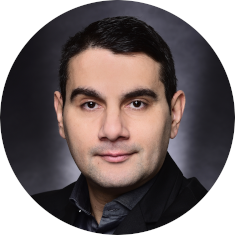
Costel Ion, CFE, LLB
Anti-Fraud Expert, Cybercrime and Organized Criminality
In an age of exponentially growing data volumes, data privacy and security risks, and more, internal investigations face mounting pressure to deliver speed, accuracy and defensibility. This session will explore artifical intelligence (AI) methods, techniques and applications that fundamentally transform internal investigations—from policy and documentation review to interviews, electronic communications, data analytics and reporting.
You Will Learn How To:
- Identify the key challenges for utilizing AI and mitigation strategies.
- Select appropriate AI methods and applications for use throughout the investigative life cycle.
- Examine case studies to identify lessons for responsible AI.
Practical OSINT Techniques for Financial Crime Investigations - 14B

Anthony Lisek, CFE
Lead Investigator, Insider Threat Airbnb
Practical OSINT (open-source intelligence) focuses on demonstrating real-world techniques for gathering publicly available information to support investigations. This session will focus on tools, methods and pivot points to collect data from social media, websites and data aggregators, highlighting how this information can be analyzed and verified.
This session will emphasize hands-on examples, such as tracing digital footprints or identifying threat actors, to show how OSINT is applied in the context of fraud using multi-layered tools in real time.
You Will Learn How To:
- Implement AI in OSINT investigations to conduct online searches efficiently.
- Identify OSINT techniques to use in social media investigations and data collection.
- Develop skills to preserve and attribute data collected for use in criminal investigations.
When Culture Speaks Louder Than Controls: How Leadership Shapes Fraud Risk - 14D

Melissa Aw Yong, CFE, CIA, CA
Authorised Trainer – CFE Exam Review Course CEO, Incito
Even the strongest controls can fail when leadership behavior, organizational tone and ethical culture are misaligned. This session examines how professionals in internal audit, investigations, ethics, compliance and financial governance can move beyond checklists to uncover the hidden drivers of misconduct.
Using global case studies, behavioral research and practical insights from real-world engagements, you will explore how leadership actions shape culture, influence fraud risk and determine whether an organization develops ethical resilience or ethical blind spots. You will learn how to evaluate leadership accountability, identify cultural warning signs and translate these observations into meaningful insights for fraud risk assessments and reporting.
By the end of the session, you will have actionable frameworks and tools to strengthen assurance, elevate conversations with senior leadership and enhance your influence as a trusted advisor in managing and mitigating leadership-related fraud risks.
You Will Learn How To:
- Evaluate leadership tone and accountability structures and recognize how they drive or deter fraud risk.
- Assess ethical culture beyond formal policies using behavioral, communication and decision-making indicators.
- Identify warning signs where culture gaps undermine controls and enable misconduct.
- Implement practical frameworks and tools to report findings that effectively influence boards and senior leadership.
AI, Social Engineering, and Cryptocurrency: The Scam Trinity - 14E

Marc Evans, CFE
Co-Founder Fraud Hero
Criminals are now blending social engineering, AI-powered impersonation and cryptocurrency to execute faster, more convincing and harder-to-trace scams. This session breaks down how these elements work together to deceive victims, bypass traditional defenses and move stolen funds instantly.
In this session, you will learn the real-world tactics scammers use, the vulnerabilities they exploit in people and organizations, and how these crimes escalate into major financial losses. Most importantly, you will walk away with strategies to recognize red flags early and stop these attacks before they start.
You Will Learn How To:
- Recognize how AI enhances modern social engineering attacks.
- Recall the tactics criminals use to manipulate victims and gain access to accounts and business operations.
- Discern why cryptocurrency has become the preferred payment method for scammers.
- Identify red flags early and apply proactive prevention steps.
Assessing the Anti-Fraud Technology Landscape - 14F

Mason Wilder, CFE
Research Director Association of Certified Fraud Examiners
While technology marketing from the last several years might suggest that there is a technical solution to any fraud problem, organizations generally have to pick and choose which technologies they implement into their anti-fraud program as well as the specific applications for those technologies. This session will explore the reality of how ACFE members' organizations are deploying technology against fraud, covering applications ranging from data analytics to artificial intelligence, biometrics and more.
You Will Learn How To:
- Differentiate among major anti-fraud technology application areas (e.g., data analytics, artificial intelligence, biometrics).
- Evaluate common constraints and challenges for implementing new anti-fraud technologies.
- Associate emerging technologies with current and prospective anti-fraud applications.
The Social Media Effect: Understanding GLP-1 Risks in Health Care - 14I

Stephanie Benson
Senior Manager, Fraud Waste & Abuse Evernorth Health Services
The explosive rise of GLP-1 medications for weight loss, fueled by viral trends on platforms like TikTok, has triggered a fraud crisis unlike anything the healthcare industry has faced before. This surge in demand, with no signs of slowing down, has created a complex and unprecedented landscape where counterfeit drugs infiltrate supply chains and fraudulent prior authorizations proliferate. These schemes not only jeopardize patient safety but also siphon billions from healthcare systems and exacerbate shortages, leaving those who truly need these medications without access. Drawing on more than a decade of experience combating fraud, waste, and abuse, Stephanie Benson will deliver critical insights into this emerging threat. The session will cover investigative strategies, key risk indicators, and practical controls to help organizations stay ahead of bad actors. Attendees will leave empowered to identify red flags, implement proactive measures, and safeguard both patients and payers from the next major fraud epidemic.
You Will Learn How To:
- Navigate the Emerging Risk Landscape
- Identify Key Red Flags and Risk Indicators
- Implement Investigative Strategies and Preventive Controls
Avoiding False Confessions - 14J

Joe Koenig, CFE, MPA, FCLA
Forensic Linguist KMI Investigations LLC
Understanding communication is a critical and complicated, complex process. Using forensic linguistics, this session will break down the communication process and help you to better understand what is and is not being communicated and why precise and accurate communication results in better, factual and more ethical decision-making. Equally important is the minimization of contamination. Many false confessions are the result of contamination, intentional or unintentional. Limiting the number of interrogators is essential to minimize contamination as questions, the number of interviewers, interview locations, and even the absence of contamination itself, contaminates. In this session, supervisors and investigators alike will explore the warning signs of a false confession.
You Will Learn How To:
- Identify the “real” message being communicated during investigative interviews.
- Recognize and interpret partial truths.
- Compose questions ethically to eliminate contamination.
- Use simple, understandable questions to reduce “wiggle” and ascertain the truth.
Policies
CPE Credit
Please note: To be eligible for CPE credit, you must complete the final exam within one year of purchase date. You may only claim CPE credit for a course once.
ACFE Online Self-Study Courses
Features:
- 24/7 access to courses through your Internet browser
- Save time and quickly earn CPE credits with instant access, grading and printable certificate
- The flexibility to start or stop a course and pick-up right where you left off
- No additional shipping fees
Learn More about accessing your online self-study course.
Learn More about online self-study courses and their features.
System Requirements:
- Internet access: High-speed connection recommended
- Speakers required for video sound

Ordering and Returns
Satisfaction Guarantee
If you are not 100% satisfied with any ACFE product, you may return it for a full refund.
Ordering & Returns Policy