





‘Juice jacking’ plus music gift cards
Read Time: 6 mins
Written By:
Robert E. Holtfreter, Ph.D., CFE
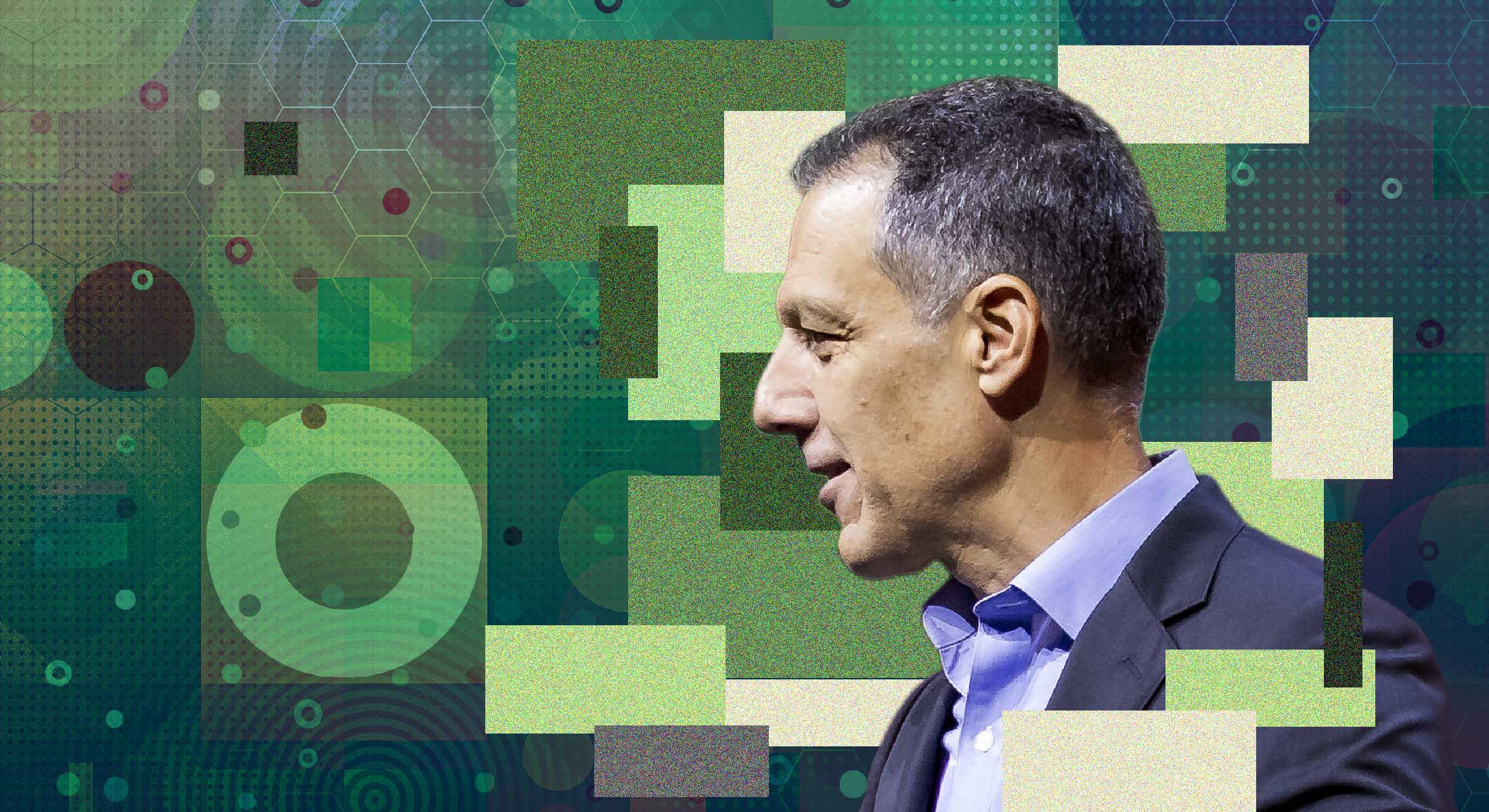
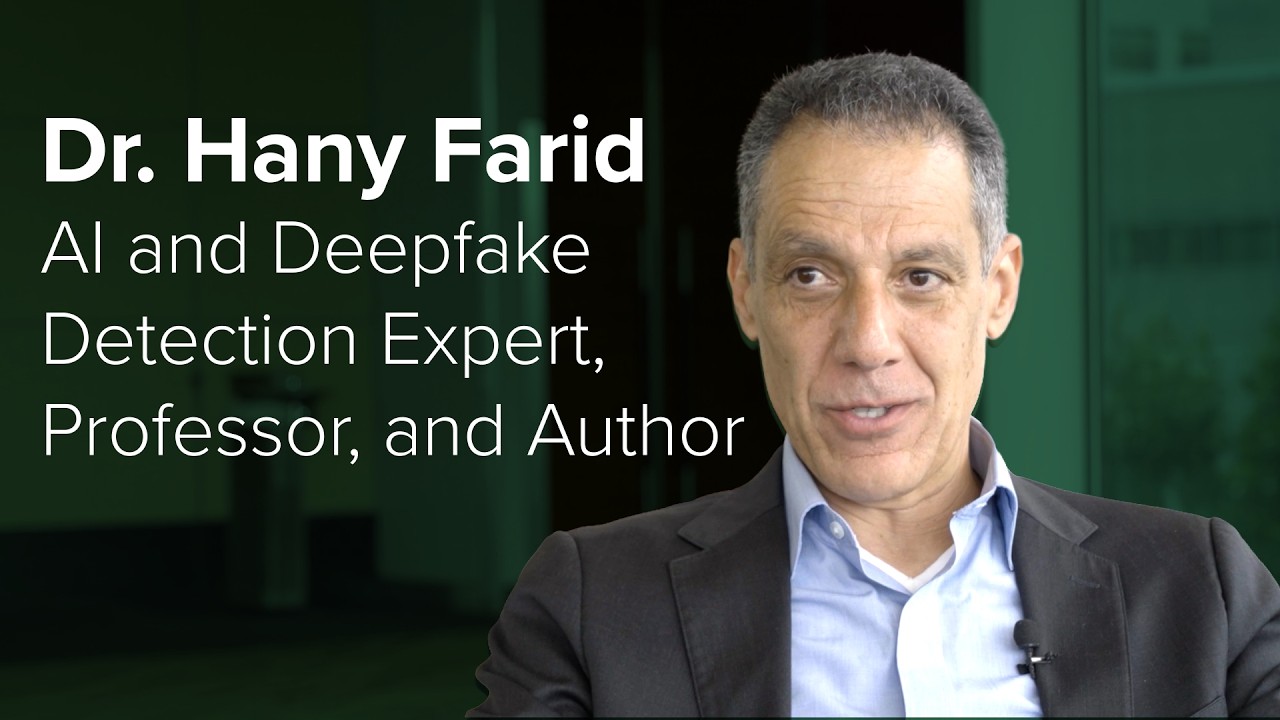
Hany Farid, Ph.D., is well-versed in the ways technology can be used to create and manipulate images. In a way, the digital forensics expert was raised on photography, growing up in Rochester, New York, where his father worked as a chemist for film photography innovator Eastman Kodak. Farid learned from an early age the processes that go into taking photos and developing them.
In the last analog days of the late-1990s, while finishing up a postgraduate appointment at MIT in Boston, Massachusetts, Farid said he started thinking about digital photography. According to Farid, his expertise in digital forensics was sparked while engaging in a typical analog activity: standing in line at the library, waiting to check out a physical book. Without smartphone and its palm-sized computer power to stave off boredom, Farid picked up a book on the return cart titled “Federal Rules of Evidence.”
“I opened it to a random page on introducing photographs into a court of law,” Farid recounted in an interview with Fraud Magazine. “As an amateur photographer, I’d already been thinking about things related to images and vision.”
He turned to a page about the rules of presenting 35 mm negatives, commonly used in filmmaking, as evidence. Along with instructions for properly submitting photographic evidence was a footnote about digital film. “The footnote said to treat digital film like a 35 mm negative, but they’re not the same,” Farid said. “Something that’s digital is inherently malleable. I started thinking about what would happen in the courts when digital media became widespread.”
In 2001, Farid was in his first teaching post at Dartmouth College and consistently losing tennis matches against a friend. He decided to have a little fun with digital photography at the winner’s expense. Using Adobe Photoshop, he superimposed his friend’s head over an image of tennis great Andre Agassi. It was a joke, but it turned into another object lesson in the possibilities of digital technology. “I had to do a very specific manipulation, and I remember thinking that it would leave behind an artifact I could detect,” said Farid. “Fast forward 25 years and now we’re all talking about artificial intelligence. I thought [digital forensics] would be a small, niche field.”
Hany Farid, Ph.D.The best way to defend against an adversary is to be the adversary. You must understand how these tools work and what they’re capable of, because then you’ll know your adversary’s limits.
Farid has used his expertise in digital forensics and computer science to help Microsoft develop PhotoDNA in 2009, a program that can read “digital fingerprints,” codes or “hashes” in images to identify child sexual abuse material online. As a computer science professor at the University of California, Berkeley, in 2020, he contributed to Project Artemis to review historical online messages on Microsoft’s Xbox gaming platform and scan online text chats for adults seeking to groom children for sexual abuse.
Today, journalists, law enforcement agencies and governments turn to the current Dartmouth College professor when they need help authenticating an image, video or audio file possibly manipulated with AI. Farid, along with the cybersecurity firm he co-founded, GetReal Security, applies training in mathematics, computer science, digital forensics and photography to peel back the layers of a media file to reveal reality. But rapid advances in AI technology are making it much harder to authenticate files, even for an authority on the subject like Farid.
People in the business of seeking truth, including fraud fighters, may see a daunting future ahead as AI technology is used to distort reality. Fraudsters don’t need any special training or skill to perpetrate their schemes with AI; these tools are widely available and easily accessible. With recent headlines about AI agents going rogue and former employees of AI firms warning that technology they’ve developed could destroy humanity, Farid understands that people are worried; he is too. But in an interview with Fraud Magazine following his keynote at the 37th Annual ACFE Global Fraud Conference, Farid said that to overcome the uncertainty posed by an AI-dominated future, fraud fighters must use AI, learn its limits and become true fraud adversaries.
A prominent U.S. senator hasn’t been seen in weeks. It’s well-known that he’s in poor health, and there’s public speculation the politician is incapacitated — or dead. Then his staff produces a “proof of life” photo in which the politician is sitting up in a hospital bed next to his wife, smiling and holding the latest issue of The Washington Post as confirmation that he is, indeed, alive. But some believe it’s not real and are certain the image was generated using AI.
Farid examined the image of U.S. Senator Mitch McConnell and determined that it was real. How did he come to that conclusion?
He detailed the different tests and procedures he used to confirm the photo’s veracity to ACFE Global Fraud Conference attendees. First, he had to figure out when the photo was snapped. But, according to Farid, AI can’t do that, as some people used it to enhance the newspaper in McConnell’s hand. “Enhancing doesn't work,” Farid said. “AI can’t read the newspaper; it hallucinated letters and headlines.”
Farid applies knowledge of the geometry involved in the interaction of light with the physical world, how light passes through the lens of a camera and the artifacts that photo-editing software leave behind. Statistical tests can reveal irregularities in an image that may suggest it’s fake.
“There’s no trace that it’s fake,” Farid told conference attendees. “When I first saw the photo, I thought it was fake. We did a whole body of [statistical] tests. We examined the lighting because he’s being illuminated by the sun entering the window next to him.”
Farid further detailed the process of authenticating files to Fraud Magazine, explaining that every case is different depending on the type of file (image, video or audio). What’s in the file also matters. “If somebody famous is in it, it’s different. If it’s an outdoor scene, it's different than an indoor scene.”
Essential to authenticating files is figuring out their provenance and who shared them first. “Was it first shared by a known bad actor?” Farid then obtains the highest quality file possible. “Usually, when content goes viral on social media, there are multiple versions. You must go back as far as possible in the chain to the first shared file because that’s where the forensic evidence is richest,” Farid told Fraud Magazine. “You rip out the metadata and look for watermarks. Then you ask: ‘If it’s fake, how was it done? If this is how it was faked, what can we look for? Was the person added or removed? Is the entire audio fake or were a few words added to change the content?’ Put yourself in the mind of the adversary and start looking for clues.”
A June 2026 profile of Farid published in The New York Times traced Farid’s growing concerns about AI and the harrowing notion that people will no longer agree on what’s real. Fraud Magazine asked Farid to reflect on the profile and his apprehensions about AI. “What does the world look like when we don’t share the same sense of reality?” he said. “We’re no longer disagreeing on how to respond [to something] but if we should respond. That’s a real problem for societies and governments and economies. We need a shared sense of reality.”
The Times profile was largely built around Farid’s examination of a video depicting a U.S. Tomahawk missile striking a girl’s school in Iran, which killed many of the young students inside. Farid concluded the video was real but viewing it multiple times took its toll. “When I analyze a piece of content and find an artifact, an inconsistent shadow, lighting, reflections, vanishing points, whatever it is, I can usually say that I found something unexplainable, which could mean it’s fake,” he told Fraud Magazine. “But when I run my battery of statistical tests and don’t find any evidence of manipulation, I don’t know if I’ve gotten to the finish line.”
“That case was hard because of the emotional toll, but also because I believed it was real, and we have good evidence it is. The nature of authenticating something is that a lack of evidence may leave you feeling queasy,” he said.
Farid acknowledged the Times profile was a dark but honest portrayal of him grappling with advancements in AI technology. “If you go back to the foundations [of photography,] we’ve always been able to manipulate images,” said Farid. “[Soviet Russia leader Josef] Stalin famously did that, airbrushing his enemies out of photos. We use Photoshop to alter digital photographs. What’s different today is the ease with which anybody can manipulate images, video and sound. You don’t need money or skill.”
According to Farid, AI on its own isn’t necessarily the problem; its true danger lies in the medium that disperses it. “AI with social media is the problem,” Farid said. “I could create a deepfake and share it with five friends. But I amplify it with social media and the deepfake can have millions of views in minutes.”
There are certain jobs that depend on knowing reality. Journalists, college professors, healthcare workers, world leaders and fraud examiners, just to name a few, all need truth to do their jobs successfully. Farid said that people in those professions need to “get smart about AI fast.” AI is now a part of our lives. “It’s here to stay, and it’ll be used in cool, creative ways and horrific ways.”
As Farid told Fraud Magazine, getting smart about AI means using it and truly understanding it. “The best way to defend against an adversary is to be the adversary. You must understand how these tools work and what they’re capable of, because then you’ll know your adversary’s limits.”
It helps to know what AI is and what it isn’t. Going back to the 1950s, in the early days of computer science, when a group of researchers at Dartmouth College first conceived of artificial intelligence as a computer that can reason like the human brain can assist in that understanding. [See “A brief history of artificial intelligence” at the end of the article.]
According to Farid, that original definition doesn’t accurately describe what today’s so-called artificial intelligence models do. “Nothing we’re talking about today is ‘artificial intelligence.’ Everything we’re talking about now is machine learning,” Farid said. “What we’re talking about is pattern matching.” Machine learning is a subset of AI with algorithms that learn patterns in data and make inferences about new data, enabling machine learning models to make decisions or predictions. Large language models (LLM), like OpenAI’s ChatGPT and Anthropic’s Claude, are “sophisticated pattern-matching machines,” Farid said.
LLMs are built to be helpful assistants, trained on billions of data taken from the internet. “The term ‘large language model’ comes from how they’re fed massive amounts of data. It’s highly sophisticated autocomplete,” Farid told Fraud Magazine. “But this is where it gets interesting. The fine-tuning and reinforcement from humans teaching the LLM what’s a good answer, a bad answer or a better one is helping them get good enough to train themselves.”
Predictive and generative AI use machine learning models in different ways. Predictive machine learning is used to predict things such as determining whether someone is at a high risk of defaulting on a loan or whether a prison inmate up for parole is at risk of recidivating. Generative machine learning (like ChatGPT) creates wholly new content, such as deepfake videos, images, audio or text. [See “A glossary of AI-related terms” at the end of the article.]
“Soon a lot of this content is going to be both human- and AI-generated,” he said. “For example, I take a photograph then use an LLM to change something in it. Or I write an essay, and I use AI to clean up my grammar. We're going to get into a much more complicated landscape of provenance.”
According to Farid, if you want to authenticate a file, you must approach it with humility. As Farid’s own research has shown, human visual and auditory systems are unreliable witnesses. “You’re not good at it, and whatever you read [about AI] six months ago is no longer true,” Farid said about people’s ability to accurately determine whether a file was AI-generated. AI technology is advancing every day, optimizing and diminishing the old AI clues. Six-fingered hands and extra limbs are going extinct.
Farid told Fraud Magazine that on several occasions, he’s posted a detailed analysis of an image or video online and invariably someone will tell him he’s reached the wrong conclusion. “Real things can look weird because of resolution and compression. Don't latch onto something and say, ‘Aha!’” Farid explained that there’s a direct correlation between quality, resolution, and length of a file and the ease of authentication. “If somebody gives me an eight-second video that’s been heavily compressed, I’m limited in what I can tell them. The more pixels, the longer the piece, the better the quality, the better off you are because it gets harder to detect as the signal degrades.”
“Don’t become so skeptical that you disbelieve everything you see. That won’t help you either. Come with some humility and some healthy skepticism and understand the world is complicated.”
Don’t become so skeptical that you disbelieve everything you see. That won’t help you either. Come with some humility and some healthy skepticism and understand the world is complicated.
If you’re worried over the specter of LLMs overtaking humanity, Farid told Fraud Magazine that considering past patterns of technological advancement can put the current state of AI in perspective. Technology progresses over time in a “sigmoid,” or S-curve. At first, little happens and progress remains flat. Then there’s a flurry of activity: Developers introduce innovations and people adopt the technology for use, creating a steep pattern that resembles a hockey stick. Then progress levels off. Farid compared it to the trajectories of mobile technology and social media. “They exploded and changed constantly with each new version. We’re in the steep part of the pattern with AI,” Farid said while adding a slight wrinkle to AI’s path. “The dust will settle, but unlike other things, we can’t wait for the dust to settle with AI. It's going to be more disruptive than what we’ve seen in the past.”
Researchers are still learning about AI’s limits, including its tendency to hallucinate, or fabricate, details. Those hallucinations happen because LLMs are statistical inference engines, making guesses based on past data. Farid cited the example of a grainy image of Alex Pretti, an intensive care nurse killed in a confrontation with U.S. Immigration and Customs Enforcement (ICE) agents during protests against ICE operations in Minnesota in early 2026, enhanced by AI. In the enhanced images, a shadow on the street looked like it was lined up with his hand, suggesting that Pretti was either holding his phone or a gun. “The [AI] tool is looking for a pattern and guessing the likely outcome. That’s all it can do,” Farid told Fraud Magazine. Hallucinations are created by what LLMs ingest from the internet. “And the internet, as you may know, isn’t always right. Sometimes the hallucination isn’t a hallucination. Sometimes it’s bad data.”
Fraudsters use AI to execute complex schemes, determine which organizations or individuals to target, create deepfake videos and audio files to deceive victims, and demand ransoms from organizations after cyberattacks. According to international law enforcement agency Interpol’s 2026 Global Financial Fraud Threat Assessment, AI-enhanced fraud schemes are 4.5 times more profitable than traditional methods. What’s enabled criminals to be far more efficient and productive is agentic AI — automated systems that can perceive, reason and act on their own.
Farid told Fraud Magazine that he sees several areas of emerging fraud risk for organizations, including hiring and brand protection.
“Our day-to-day interactions, onboarding and hiring are largely virtual. There are highly sophisticated scams affecting the hiring process, especially from state-sponsored threats penetrating companies and bait-and-switch interviews where a deepfake video of one person interviews for a job and somebody else shows up,” Farid said. Those state-sponsored schemes include reports of North Korean information technology workers using stolen identities and deepfake videos to get jobs at Fortune 500 tech companies and funneling their paychecks into the authoritarian regime’s weapons program.
According to Farid, human resources departments already have mechanisms to mitigate risk. “When I first visit an organization, I show them identification. They’ll take my picture and give me a badge. The HR process is about controlling the pipeline.”
Brand protection, however, will be trickier for organizations to manage. “If someone’s mad about something a CEO said or did, they can create a fake video or image to damage the brand,” Farid said. “You can’t control what one person out of eight billion does and know what’s going to anger them. The best you can do is monitor the threat and have good relations with big social media companies to have a mechanism to respond [to an attack].”
But, of all the fraud threats posed by AI, Farid told Fraud Magazine that identity theft is still his greatest concern. “It’s one thing to create a fake image or video to damage a brand, but the ease with which I can steal your identity is shocking,” he said. “Three years ago, you needed hours of video and audio to capture someone’s likeness and voice. Now, [a fraudster] only needs 10 to 15 seconds of audio and a single image. You can record somebody on the street.”
“Say what you will about them, but cyber criminals aren’t dumb; they’re adapting quickly to this technology every day.”
Your employees are probably using AI. They might even be uploading sensitive data into an open-source LLM. “If people in your organization are uploading confidential documents to a public LLM, you’re vulnerable to liabilities. You need to figure out how these tools will be most useful for your organization in a way that protects people’s privacy and corporate secrets,” Farid said.
To help protect your organization from an AI-generated security breach, you need a clear policy regarding AI use and someone in charge of the response. “It’s no longer a question of if you’re being attacked. It’s where you’re being attacked,” Farid warned. He recommended regular penetration testing with simulated cyberattacks to determine where the organization might be vulnerable before a perpetrator figures it out.
Farid suggested that organizations consider tabletop exercises, where they engage in facilitated discussions of hypothetical attacks and how to respond. “I’ve seen many organizations that aren’t prepared for deepfake attacks,” he told Fraud Magazine. “For example, we know the playbook for ransomware attacks.” Farid described one tabletop exercise in which employees view a deepfake video of the CEO directing them to pay the ransom to hackers. “It derails people because nobody expected it or thought they’d know a deepfake of the CEO if they saw it,” he said. These exercises will prepare you for the unexpected, and you need someone in charge of the response so you’re prepared to act when attacked for real.”
For all his concerns about AI, Farid remains optimistic about it, if not cautiously so. He’s especially hopeful about AI’s creative potential. “The next great blockbuster movie won’t be made in Hollywood. It’s going to be made by a kid using an AI program in their bedroom,” he said. “These technologies have democratized access to writing scripts, hiring actors, filming and music. There aren’t any barriers to someone with a creative mind.”
Farid told Fraud Magazine that he often uses LLMs to create teaching examples that would otherwise take him hours to create. He encourages students to chat with LLMs while watching his recorded lectures to ask questions and practice problems to test their understanding. “It can be a phenomenal tool for students,” said Farid. “Where it goes sideways is when a student prompts it to do their homework. These tools aren’t good or bad, but it’s our job to figure out the guardrails without offloading all our cognitive burdens on them.”
Yet he returns to the complicated questions regarding how people use LLMs. “Have they been trained fairly? Is it fair to upload every video (or book) without explicit consent from the original creators? We need more discussions about these,” he said. “AI systems are trained on human-generated content with human biases regarding gender, race and age, etc. When you’re using them in predictive ways, you’re simply reflecting those biases.”
Fraud examiners may use LLMs to detect anomalies in data. Farid said that’s exactly what LLMs are trained for — searching for patterns and suggesting when something might be askew in the data. But Farid cautioned that we can’t always determine why an LLM responds as it does. “A human must always review what the LLM surfaces. It will make things up. I’ll ask it a question about an image or video where I already know the answer just to see how it responds. You’ll learn what an LLM does well and not so well.”
Farid also warned that LLM models aren’t static. The information they return may be different from one day to the next because they’re constantly being retrained. “When I’m coding, I usually have two or three LLMs running in parallel. I like going across multiple models for consensus.”
If you’re looking to implement an LLM in your organization, Farid told Fraud Magazine that the first step is having the data to train it. This step uses a massive amount of computer power, but pretrained open-source models are available to ease the process.
Then there’s the inference stage, or operational stage, where the model applies the data it’s been trained on. “You can train your own model or bring one in and do what’s called fine-tuning, where you provide custom application data,” Farid said. He acknowledged that this can be hard for small organizations with small budgets because it requires a large team to do the work. “Fine-tuning the model requires effort. You’re going to run it every day; you're going to need a lot of expensive GPUs [graphics processing units].”
To properly manage AI and the ways in which its use might distort reality, Farid said that governments must implement “sensible, well-reasoned regulations.” But technological advancements and regulations don’t keep pace with each other. “Regulation moves like a turtle, and tech moves like a fighter jet,” Farid said.
One possible way to control AI threats is by holding AI companies liable for the safety of their models. “Many [consumer] products are relatively safe because we’ve told companies their products were damaging, and we’ve sued them.”
Some technology safety advocates have started modeling their efforts to rein in technology companies on legal tactics used in the 1990s to hold tobacco companies liable for harm caused by their products. In August 2026, Meta, the owner of social media apps Facebook and Instagram, settled a $17 billion lawsuit with U.S. states over the role its platforms have played in harming children’s mental health. The settlement requires Meta to implement safeguards that can shield young people from social media addiction. “Once [companies] start internalizing liability, they’ll make technology better because they don’t want multibillion-dollar lawsuits.” Farid told Fraud Magazine.
He identified several jurisdictions that have started tackling AI regulations, including the European Union’s AI Act, which is one of the first laws establishing a framework for regulating AI companies and users.
“We’re not pixels on a screen. This is the physical world we’re impacting, but the narrative is starting to change and something positive is happening,” Farid said.
Jennifer Liebman, CFE, is editor in chief of Fraud Magazine. Contact her at jliebman@ACFE.com.
1935-1948: The British mathematician and “father of modern computing,” Alan Turing introduces the concept of a computer with limitless memory and the ability to improve itself. The “Turing machine” lays the groundwork for the development of artificial intelligence. In his 1948 report “Intelligent Machinery,” Turing describes his idea to train a network of artificial neurons that can perform specific tasks.
1956: A Dartmouth College research project organized by John McCarthy and other scientists investigates ways in which machines can reason like humans. McCarthy is credited with the first use of the term “artificial intelligence.”
1959: IBM researcher Arthur Samuel coins the term “machine learning” with a computer program that can improve its ability to play checkers over time.
1964: Joseph Weizenbaum introduces a computer program called ELIZA, which simulated conversations with humans. ELIZA is considered a chatbot precursor.
1966: SRI introduces Shakey, a mobile robot able to reason about its actions.
1969: Arthur Bryson and Yu-Chi Ho introduce backpropagation, which is an algorithm essential for training neural networks that process data through artificial nodes.
1970s-1980s: Overpromises about abilities and high costs associated with AI development lead to reduced government funding of research in the field and a period known as the “AI winter.”
1997: IBM’s Deep Blue computer defeats world chess champion Garry Kasparov.
1999: Technology company Nvidia introduces the first graphic processing unit (GPU), GeForce 256, which can process thousands of calculations simultaneously. GPUs allow for fast processing of images on mobile phones and personal computers.
2011: IBM’s Watson defeats “Jeopardy!” champions. The computer system was designed to receive and respond to natural language questions. Researchers trained Watson for years on data from encyclopedias.
2012: Geoffrey Hinton’s research on neural networks and deep learning is foundational to AI processes such as natural language processing and speech recognition.
2011-2015: Apple and Amazon introduce virtual assistants, Siri (2011) and Alexa (2015), which use natural language processing to understand and respond to spoken questions.
2016: Google’s DeepMind AI program AlphaGo defeats chess champion Lee Sedol.
2017: Saudi Arabia grants citizenship to a computer named Sophia. Sophia, the creation of Hong Kong-based Hanson Robotics, makes facial expressions and tells jokes.
2019: The first known deepfake attack on an organization occurred when fraudsters cloned the voice of the CEO of a British energy company to deceive an employee into wiring $240,000 to an account in Hungary.
2020: OpenAI introduces the large language model (LLM), GPT-3. It’s the largest neural network to date with 175 billion parameters and able to translate languages and ask and respond to questions. It can create text that simulates human writing.
2022: OpenAI introduces generative artificial intelligence (AI) platform, ChatGPT. The platform can interact with users, write and conduct research.
2023: OpenAI’s GPT-4, Google’s Gemini, and Anthropic’s Claude 2 support images and other inputs beyond text.
2024: Open-source AI models proliferate, providing easy access to powerful AI platforms. Fraudsters embrace it, using AI to perpetrate many different schemes.
2024: U.K. engineering firm Arup’s Hong Kong office becomes a victim of a widely publicized deepfake video attack. An employee was deceived into believing that he was part of a video meeting with a company executive who instructed him to transfer $25 million. The employee was the only human involved in the meeting; everyone else was a deepfake.
2026: International police force, Interpol, reports in its 2026 Global Financial Fraud Threat Assessment that AI has industrialized and automated fraud, making it far more profitable for criminals.
AI agent: An AI-powered software system that can receive instructions and autonomously take actions across applications to complete a task.
Algorithm: Instructions that an AI model follows to solve problems or make decisions.
Artificial intelligence: A broad term that refers to computers that can perform tasks normally requiring human intelligence.
Chatbot: A software application that can simulate human conversation with users via text or voice.
Deepfake: AI-generated media where a person’s likeness or voice is swapped with another person’s likeness or voice.
Deep learning: A type of machine learning that teaches computers to process data with neural networks, which are designed to function like the human brain.
Generative artificial intelligence: A type of artificial intelligence science that can create new text, audio and video content in response to a prompt from a user.
Large language model: A type of AI trained on massive amounts of data to understand, summarize, translate and generate human-like language.
Machine learning: A subset of AI that allows computers to learn from data and make decisions or predictions.
Natural language processing: A branch of artificial intelligence that allows computers to read, hear, speak and understand human language.
Neural network: A machine learning model developed to work like the human brain with simple processing units called nodes that can recognize patterns and make decisions.
Penetration testing: A simulated cyberattack to test for vulnerabilities in a system.
Red teaming: A process in which ethical hackers test cybersecurity effectiveness.
Tabletop exercise: A discussion-based exercise to plan responses to a cyberattack.
Unlock full access to Fraud Magazine and explore in-depth articles on the latest trends in fraud prevention and detection.
Read Time: 6 mins
Written By:
Robert E. Holtfreter, Ph.D., CFE
Read Time: 6 mins
Written By:
Robert E. Holtfreter, Ph.D., CFE
Read Time: 5 mins
Written By:
Robert E. Holtfreter, Ph.D., CFE
Read Time: 6 mins
Written By:
Robert E. Holtfreter, Ph.D., CFE
Read Time: 6 mins
Written By:
Robert E. Holtfreter, Ph.D., CFE
Read Time: 5 mins
Written By:
Robert E. Holtfreter, Ph.D., CFE